Based on what I observe from my travels, visiting hundreds of lessons and meeting hundreds of teachers, I find I keep coming back to these three big areas to work on in most settings:
- Inclusive Teaching – the need to teach all learners all the time.
- Responsive Teaching – the need for formative action in real time.
- Teaching through talk – the need to develop deeper oracy culture and routines.
I’ve written about each of these multiple times before so I’ll share some of those posts here. Each area intersects – arguably it’s just one agenda. The central theme is that teachers, schools needs to do a lot of deep, sustained work around pedagogical practices that ensure all learners are systematically involved in thinking about the learning; that teachers adapt and respond in light of success – taking account of all learners – and that all learners’ voices are given value, with talk seen a key vehicle for learning in most areas; true, authentic, human learning.
Inclusive Teaching – the need to systematically teach all learners all the time.
I go on about this all the time – the persistent, embedded default practice of seeking volunteers, taking hands up and basing classroom decisions around the contributions of just a small sample of students. We need to do some pretty serious work to reverse the default of ‘can anyone tell me’ to become ‘is there anyone here who isn’t sure?’ – leading to the actions needed to find out how they might be.
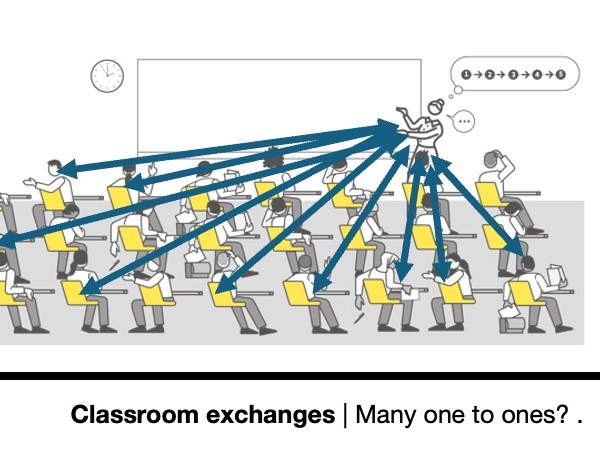
The choreography of teaching 30 children at the same time
In my opinion the practicalities – the mechanics, the routines – of running a room so that every single individual in it is learning, are not sufficiently examined and spelt out in our…

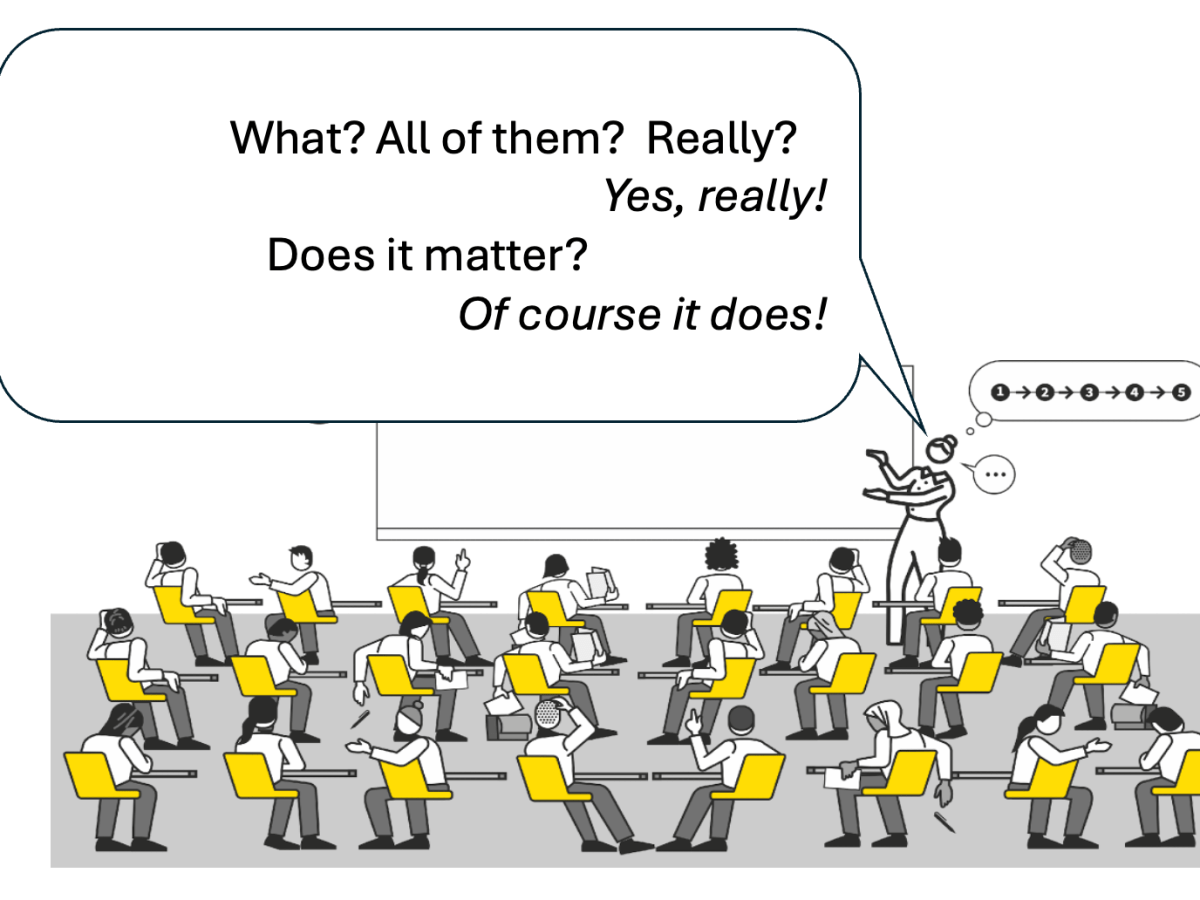
Systematic inclusion: Is literally everyone thinking, talking, practising, learning? How much does it matter to you?
I’m often struck by just how deeply embedded some ineffective teacher habits are. I see it as a collective more than an individual problem. Faced with the inherent challenges that teaching presents, there…
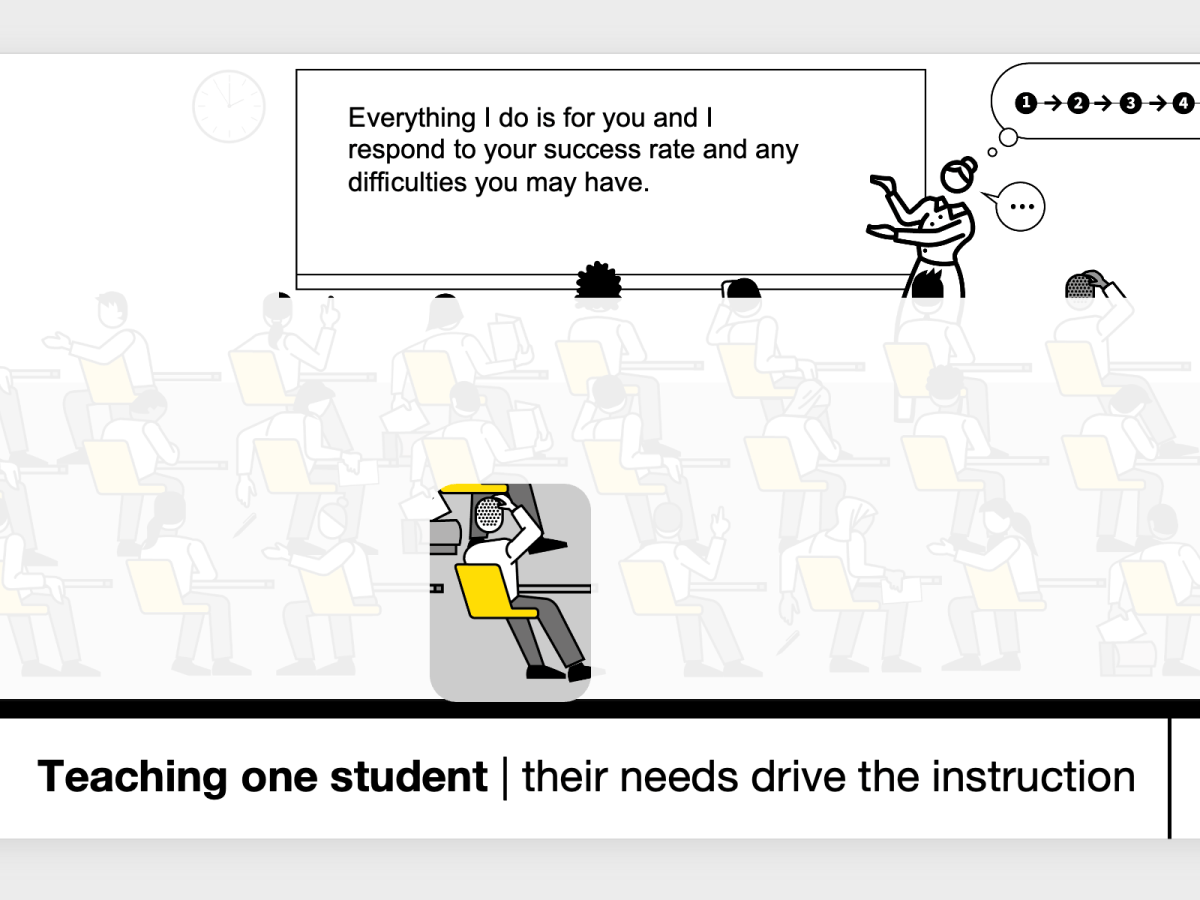
The inherent challenge of teaching a class of individuals – who each matter equally: A thought experiment
A thought experiment I often engage people with during my PD sessions is to consider the daily experience of one the least confident students in a class – someone who struggles with learning…
Some teachers need support to engineer a total mindset shift such that they realise asking for one answer from one student, asking for volunteers, being happy that a few people can answer is just utterly ludicrously inadequate. The whole point of classroom interactions is to ensure that absolutely every student is able to succeed which requires finding out how well they’re doing in real time. I think this issue needs extensive exploration in many settings because true, systematic inclusion just isn’t the norm – yet!
The new EEF guidance on inclusive teaching is really clear – accept no AI substitute! The section on explicit instruction, for example, embeds the idea that every student, including, if not especially, those with additional needs, must be directly engaged in instructional routines. ‘Frequent checks for understanding’ – must involve everyone.

Responsive Teaching – the need for formative action in real time.
This agenda is obviously related to systematic inclusion but the focus is on the need to take action in light of the information you gather about success rate during a lesson. The best formulation of this – to my mind – is the Formative Action School concept of Formative Action. This blog explores it in some detail:
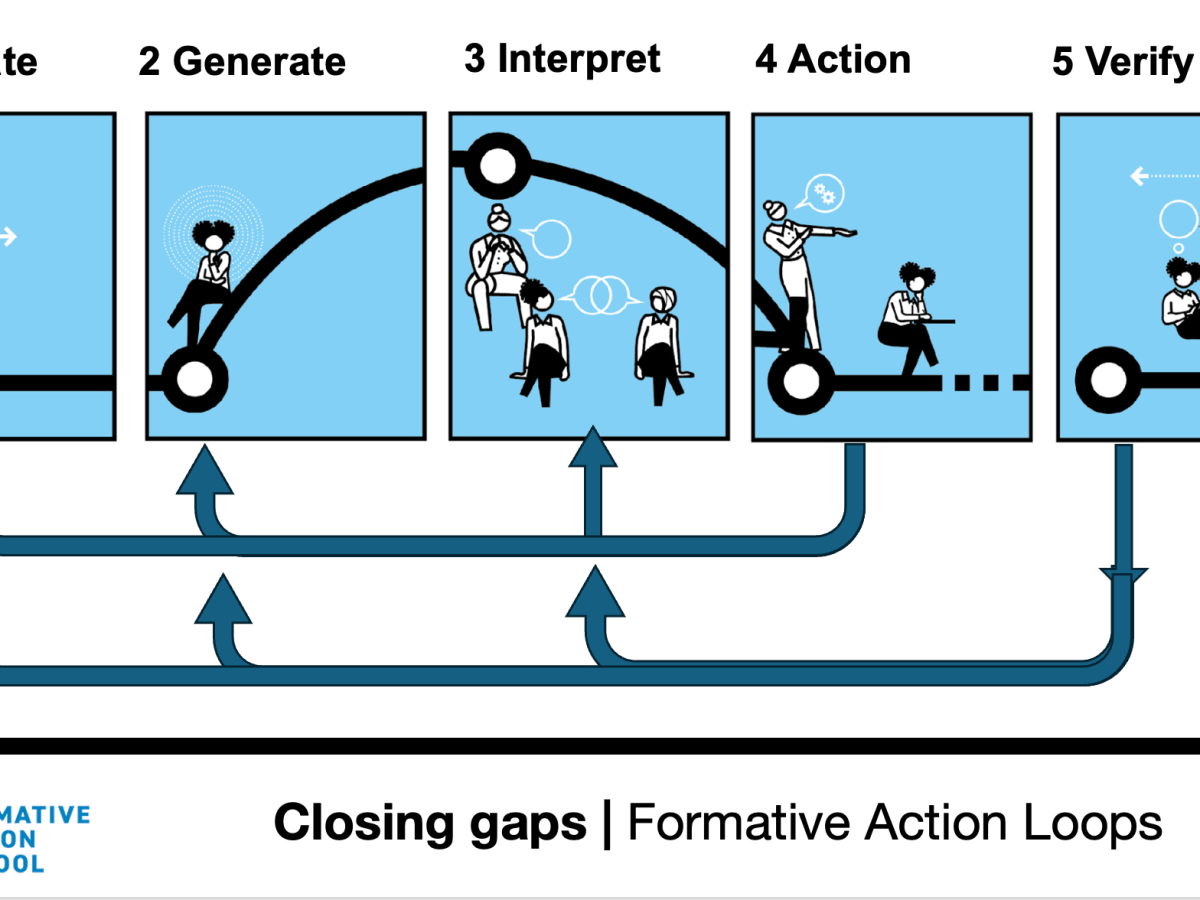
Formative Action Loops – and why teaching effectively involves creating them constantly.
Related Video: Having spent some time talking to the brilliant people at Toets Revolutie – Valentina Devid and René Kneyber – I’m convinced that the concept of formative action loops has a huge role to play in teaching and, if it were widely discussed and used to inform professional learning, a lot of things would…
The key concept lies in the word Action: teachers (and students themselves) need to evaluate success using responses that are generated during a lesson flow, interpret that information and do something about it! If you have used show-me boards and find a number of learners have gaps, errors or misconception, you need to take action! That’s the whole point – and this needs to be anticipated.

The idea of Adaptive Teaching clearly intersects with this to a high degree. Too often teachers are not resourced well enough to adapt dynamically – it’s as if schemes of work and lesson resources are designed to only go forwards assuming everyone will succeed in a linear fashion in unison. But this isn’t the reality. Adaptive teaching and formative action require a much more agile approach and this needs some deep work so that teachers are ready for it and deploying the approach day in day out.
Students who find learning hard matter as much as those who fly through; they are not an inconvenience – the learning process they need is the learning process that is needed!
Teaching through talk – the need to develop deeper oracy culture and routines.
It’s so common for teachers to bemoan the fact that children are reluctant to speak, don’t know what to say or share misconceptions – as if they’d rather they’d kept quiet! There are people who suggest that pair talk is a waste of time! But to me, all of this suggests that oracy should play a much more prominent role in a school’s philosophy and practice and in teacher development- definitely not any less! I’ve made a case for oracy here:

Student Talk: It matters – not only to deepen learning but because it also just does.
Related Video: There’s a lot of talk about oracy at the moment – which, to me, is a great thing. However, there are two poles to this discourse that, as ever, I find myself walking a line between. On one…
I’ve been massively influenced by working with Voice 21 – including visiting schools working on oracy and Walkthrus in tandem – and it’s increasingly clear to me that the oracy agenda can and should play a massive role in deepening learning. Oracy is not some extra thing on the outside; another thing to do. It’s right at the centre. The blogger who has influenced me the most this year is Grace Barron whose writing on her Speaking Volumes site. is always a major provocation – oracy matters and we should do better.
If we reframe the memory model to focus on talk, we get something like this:
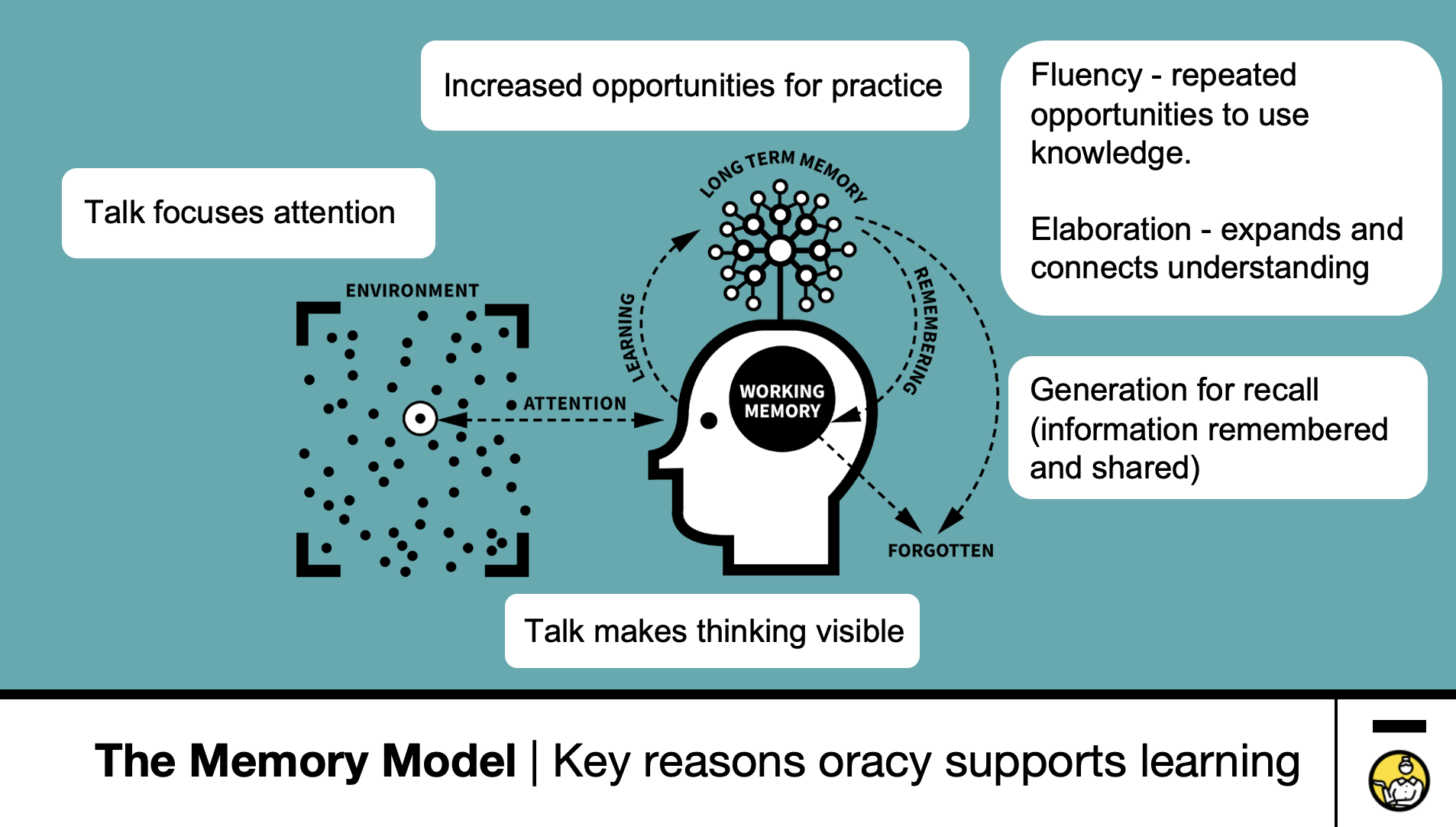
So, far from being something extra, oracy supports the learning agenda: We learn through talk. Oracy supports the inclusion agenda: We value every voice. And combing these together, oracy supports the responsiveness agenda – we listen, engage and respond.
The Voice 21 Oracy Benchmarks (for teachers and schools) spell all this out super well –
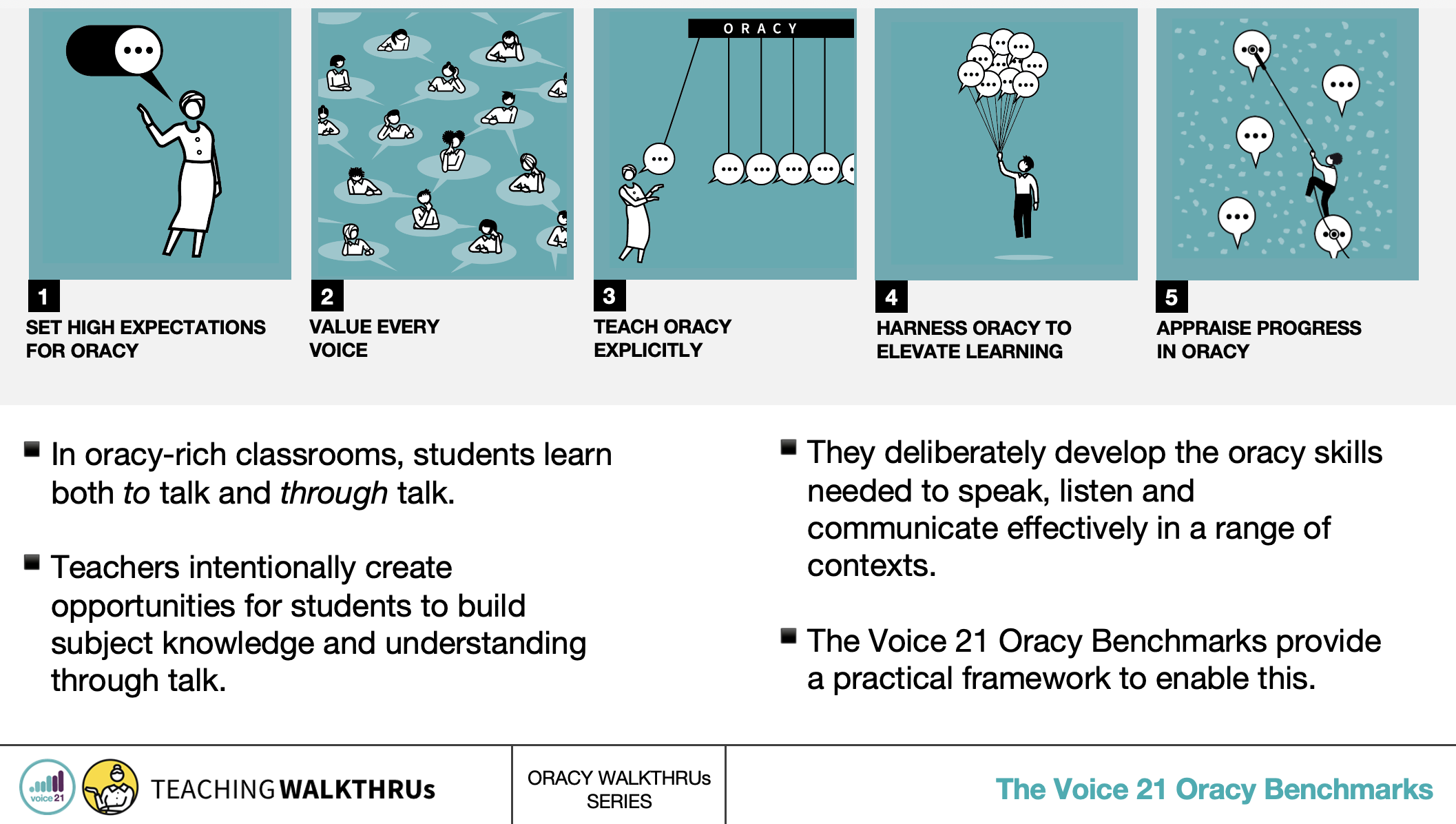
In many respects, focusing on oracy helps schools deliver on inclusive and responsive teaching. It might be better to think of all these areas as being one agenda with different components or lenses. Ultimately it comes down to ensuring that 100% of learners are actively involved in learning, that teachers interact with their progress in meaning-making and then respond in ways that deepen their learning. This requires both changes in attitudes and the development of better routines and structures; an exploration of purposes and techniques – and the agenda for professional learning needs to embrace both.
A final post you might find useful in his regard is here:
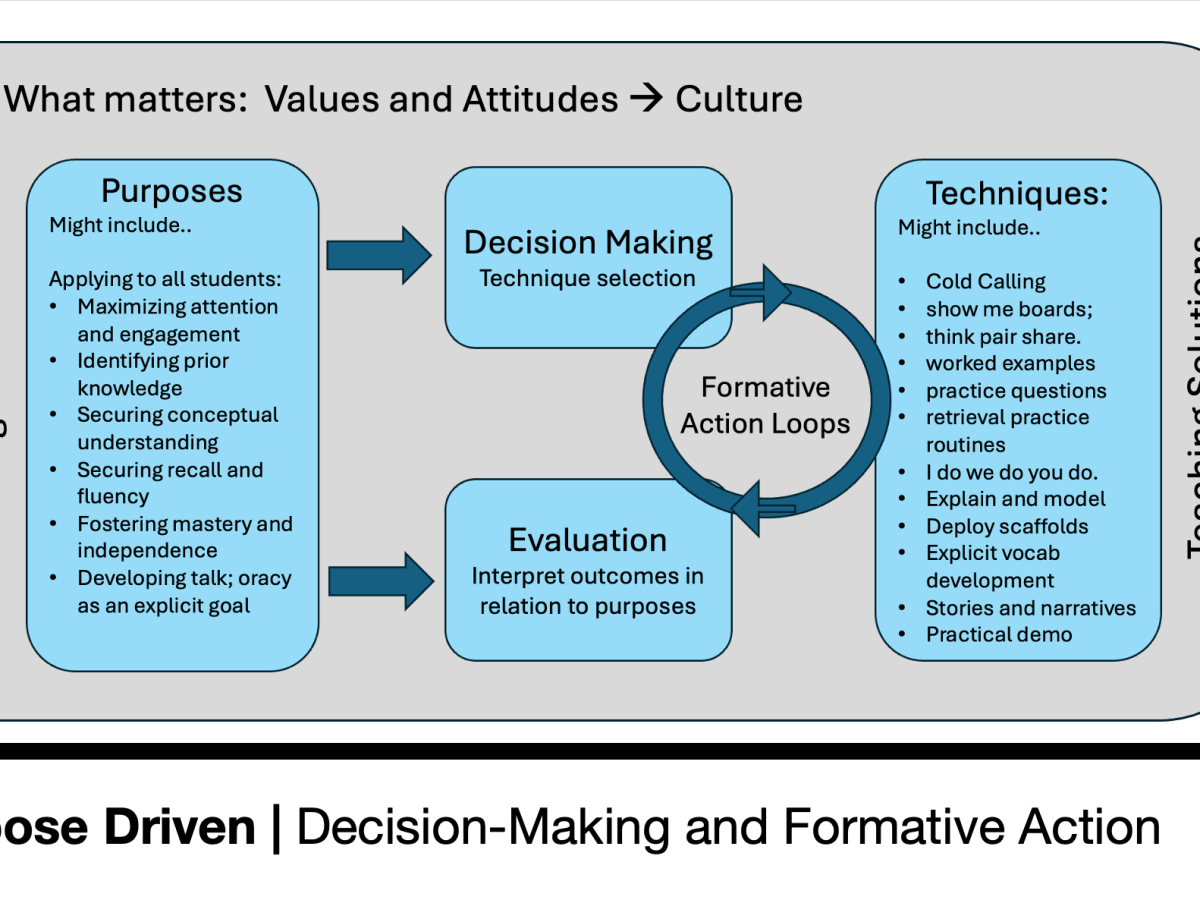
Putting teaching ideas into action: Purposes, techniques and decision-making. Connecting how and why.
There’s an interesting chicken-egg at the heart of teacher thinking and professional development which has an important role in how we shape PD programmes and the impact they have. It’s the interplay between purposes and techniques; the why and the how of what we do. Purposes. You need to know the purpose for doing anything;…

