I’ve been interacting with ChatGPT to help create something that assimilates some of the key ideas about learning that I find particularly helpful. I’ve written about most of these separately before and they all feature in my training sessions at some point or other.
I was interested to see how well they all intersect and was conscious that it’s hard to condense without losing meaning and to balance simplicity with detail. The idea was to explore the interactions – not to simply have a busy poster to add to the wallpaper. But this is what I’ve ended up with after 20+ back and forth prompt exchanges (many of which were about arrows !)
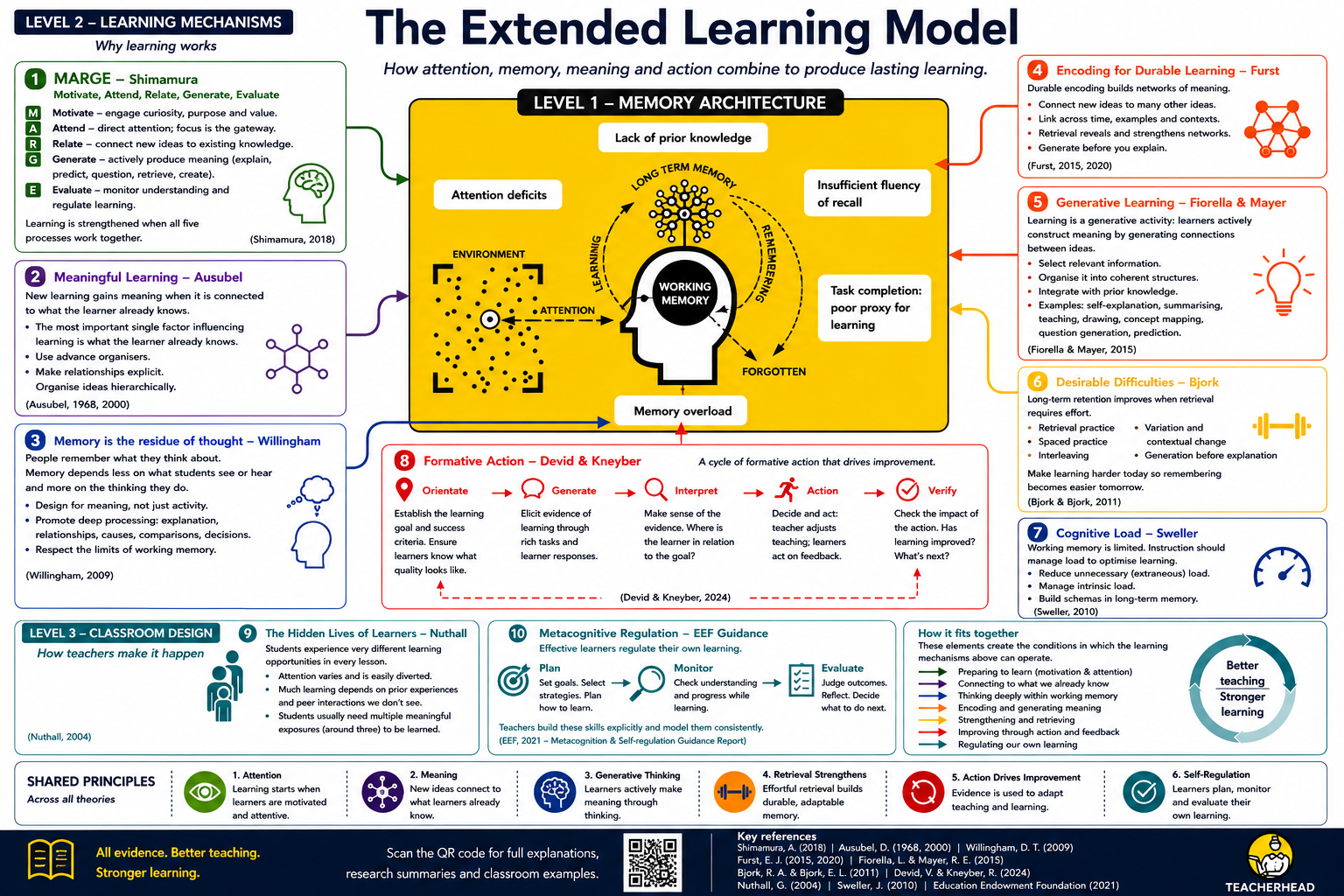
The starting points were:
- Shimamura’s MARGE Model.
- Ausubel’s Meaningful Learning
- Willingham’s memory model.
- Furst on encoding.
- Generative Learning by Fiorella and Mayer
- Bjork’s Desirable Difficulties
- Sweller’s Cognitive Load Theory
- Formative Action from the Formative Action School
- Nuthall’s Hidden Lives of Learners.
- Metacognition – as explained by the EEF.
Here’s some of the posts I’ve written on these elements before.
Introducing MARGE: A superb ebook about learning by Arthur Shimamura.
Earlier this week, twitter sharing came into its own with a glorious gift. Dan Willingham shared a link to a new, free ebook from…

The genius of DT Willingham and WDSLS.
This week I received a delivery of Dan Willingham’s Why Don’t Students Like School 2nd Edition from the bookshop and I’ve been reading through…

Rehearsal first; retrieval practice later – an important distinction.
In December, Efrat Furst delivered a superb masterclass as part of our In Action series where she explained the stages of learning using the…
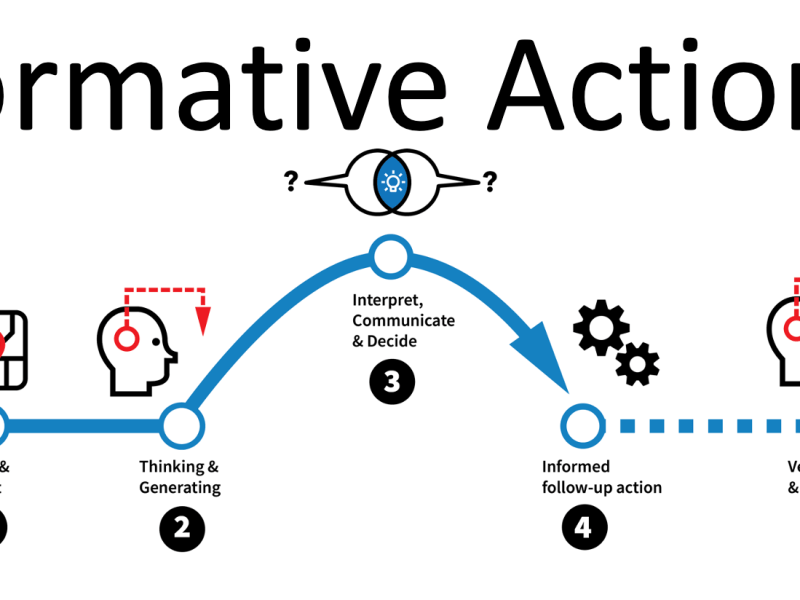
Formative Action: A brilliant, refreshing take on formative assessment and responsive teaching.
Recently I spent time with the Dutch team led by René Kneyber, Toets Revolutie where they shared their work on their concept formative action…
The summary of shared principles that ChatGPT pulled out are interesting – and helpful in their clarity and simplicity.
- Attention
- Meaning
- Generative thinking
- Retrieval strengthens
- Action Drives Improvement
- Self-Regulation
If we’re after some kind of unified model of learning that includes students as learners with agency in the process. I think that’s pretty good – always assuming people use it to dive into the details.

