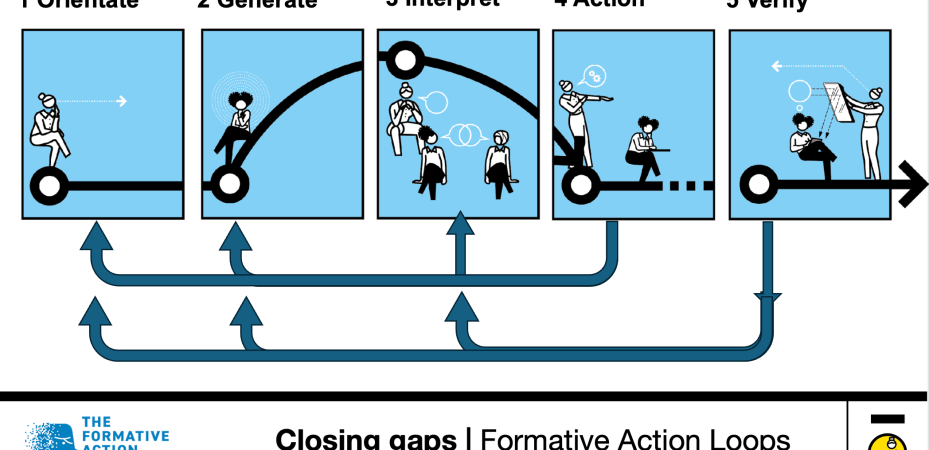
Having spent some time talking to the brilliant people at Toets Revolutie – Valentina Devid and René Kneyber – I’m convinced that the concept of formative action loops has a huge role to play in teaching and, if it were widely discussed and used to inform professional learning, a lot of things would be better! It would influence nearly everything we do in the classroom, making more students learn more deeply. Formative action loops – should be a phrase, concept and enacted process, deeply embedded in practice.
I’ve written about Toet’s Revolutie’s Formative Action concept before here:
Formative Action: A brilliant, refreshing take on formative assessment and responsive teaching.
Recently I spent time with the Dutch team led by René Kneyber, Toets Revolutie where they shared their work on their concept formative action and the training programmes they run for schools. I first…

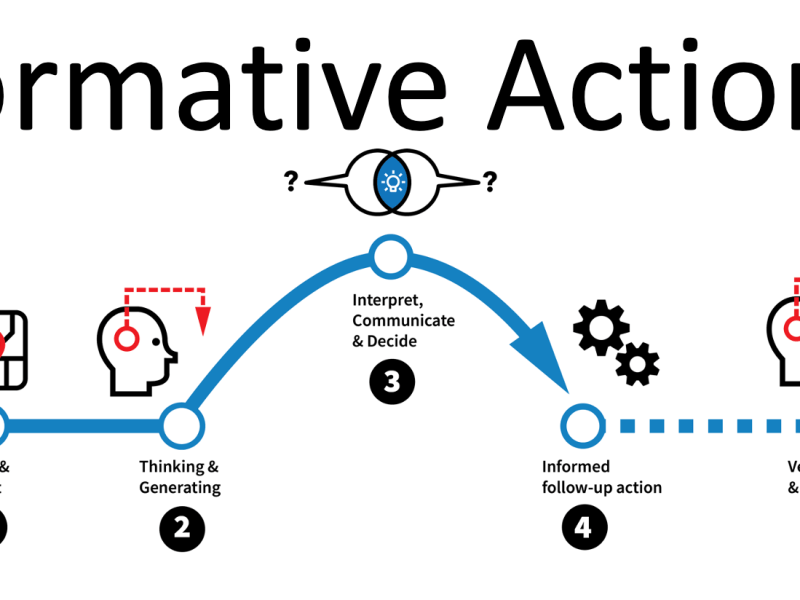
In our recent collaborative work – the WalkThrus team and Toets Revolutie exchanging ideas – we’ve agreed that a simpler version of the formative action concept can be expressed as:
Orientate; generate; evaluate; action; verify. Here ‘action’ is the verb ‘to action’. (Maybe ‘act; is better,,,, not sure!)
I’ll explain each part briefly again:
Orientate: Teacher and students need to know where they are heading in terms of a wider curriculum map – the pedagogical roadmap. Where are we now and where do we need to get to eventually? Where are we going right now, today, in terms of knowledge, skills, ideas – and what problems do we anticipate? This is all about knowing the curriculum and how to sequence it in small steps within the big picture frame.
Generate: After instructional, explanatory input, all students need to think; they all need an opportunity to make meaning building on their prior knowledge. All students need to generate responses that reveal the extent of their understanding or mastery to themselves and to the teacher.
Evaluate: Teacher needs to be able to gather information from student responses to then evaluate the success of the learning against the learning goals, deciding what the next steps might be – for individuals or the class as a whole. What meaning has been made? What are the major gaps or misconceptions?
Action: The teacher must then action these steps: This might include re-teaching, exploring more examples; extending the practice, breaking things into smaller steps, revisiting the wider curriculum road map to establish firmer foundations. Whatever the situation is, action is always required.
Verify: Finally, after the action, it’s essential to now check that the learning has been secured – we don’t just assume that gaps are closing; we verify. We find out and check. Some time might pass to allow forgetting but this could be within a lesson or extend into subsequent lessons.
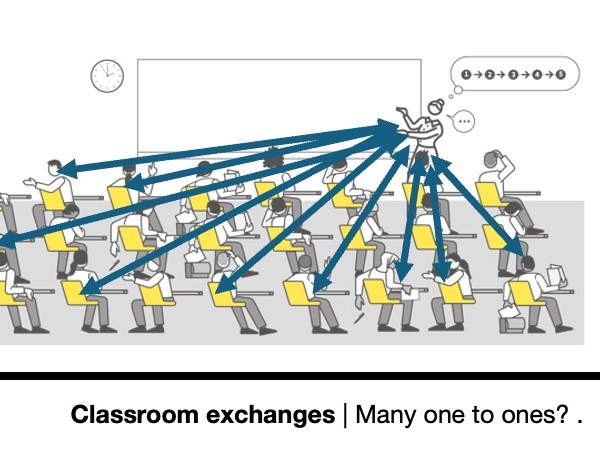
These steps apply to nearly any conceivable learning scenario. A central challenge, however is deploy each step using techniques that involve literally all students – because they matter equally. I”ve explored this at length in this post which I recommend you read alongside what’s written here:
The choreography of teaching 30 children at the same time
In my opinion the practicalities – the mechanics, the routines – of running a room so that every single individual in it is learning, are not sufficiently examined and spelt out in our training and professional discourse. If that were not true, then we’d see far fewer instances of lessons where multiple students are not fully…
However, even once you master a technique, at centre of this whole concept is that you need to engage in loops! This matters not just to be satisfying conceptually but because, in practice, it’s actually very commonly very weak in a lot of lessons.
A simple example could be that I explain to a class of 25 students what prime numbers are and get them to explore and ultimately list all the primes up to 20. Several students miss one out – say 13 or 17 – or add in 15 erroneously. I take action to re-explain telling students that they missed out 13 or 17 and why 15 is not prime. Do they now all know that 13 and 17 are prime? Well, we don’t know…. yet! We need to loop back again to check whether they do. This requires a further loop of generate – interpret to check. Then, later on, I need to know if this has stuck so I need to verify. If then, some students still miss out some primes, I need further loops back to address that issue.
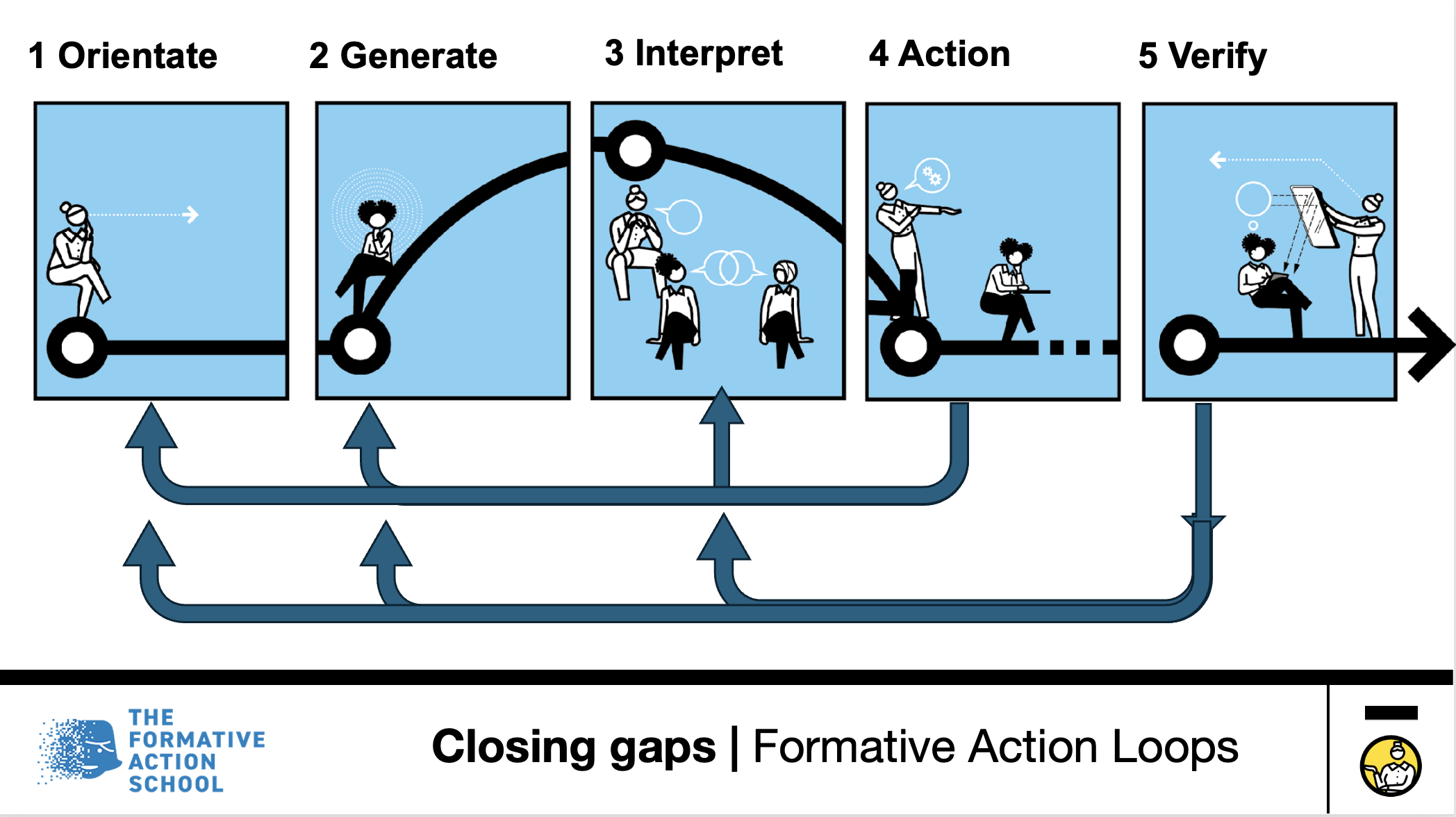
Essentially, the need to loop back is critical to inclusive, responsive teaching: that need to check, via generative responses, is critical. You don’t even know yourself if you know something – let alone the teacher knowing that you know – until you’ve generated a response that reveals your understanding.
In a recent post, I explored the importance of purposes as a driving force in professional understanding – preceding the need to develop techniques that enact those purposes:
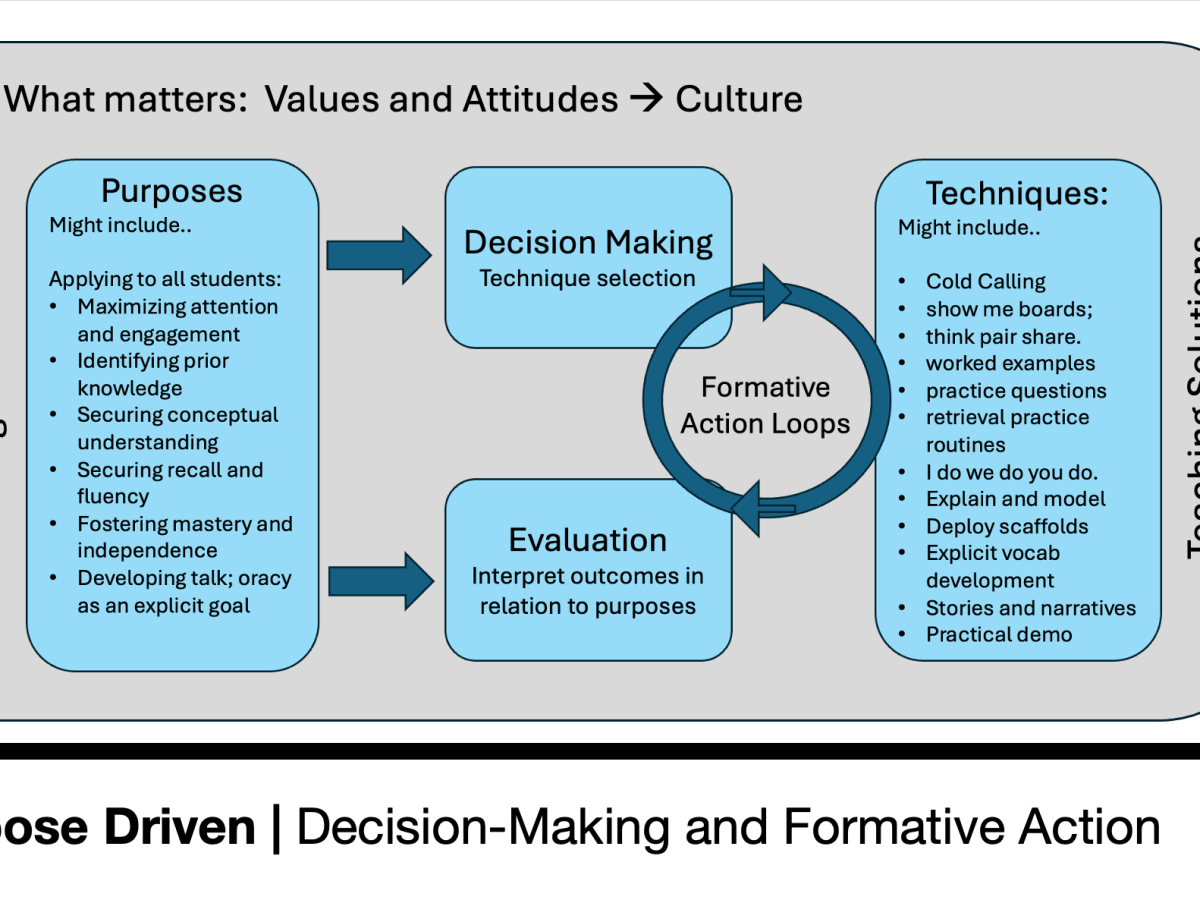
Putting teaching ideas into action: Purposes, techniques and decision-making. Connecting how and why.
There’s an interesting chicken-egg at the heart of teacher thinking and professional development which has an important role in how we shape PD programmes and the impact they have. It’s the interplay between purposes and techniques; the why and the how of what we do. Purposes. You need to know the purpose for doing anything;…
Nested in this diagram – without comment in that post – are formative action loops. At the core of the teaching process, you need specific purposes in mind, linked to the curriculum and the need for all children to succeed. The decision-making is then all about which techniques you need to create successive formative action loops, in response to success rate for each purpose.
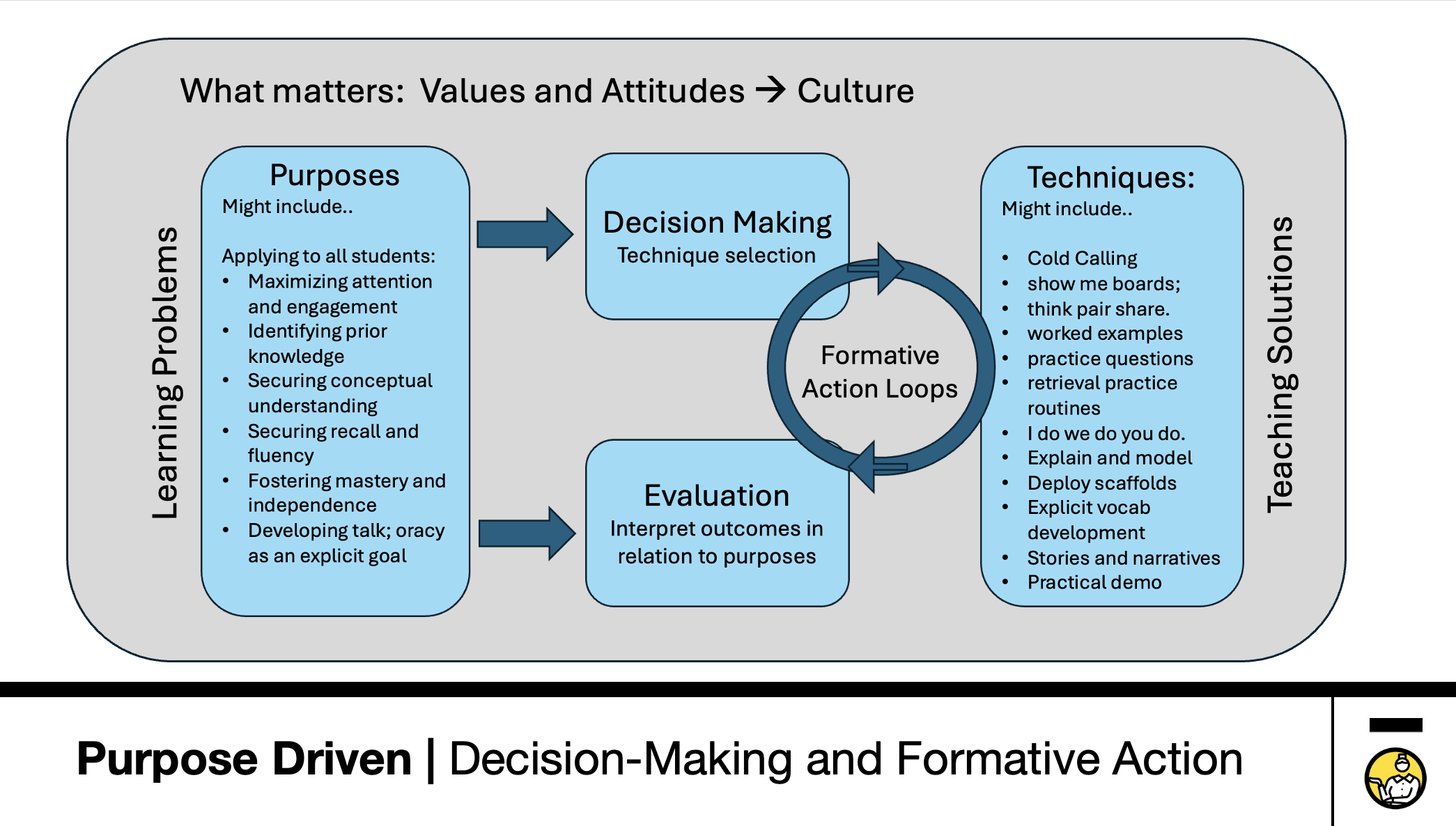
In this context, we are never just ‘doing think pair share’ or ‘doing show-me boards’ or ‘doing I do, we do, you do’ or ‘doing a Do Now’. We are always only ever using these techniques to create formative action loops linked to our purposes. You’re only using the array of techniques in the playbook to do one or more of the stages in the loop:
Orientate: establishing where are we now along the pedagogical roadmap. (Toets Rev call his PedRo which I love!) – and predicting where problems might lie.
Generate: ensuring all students are thinking, making meaning, revealing their understanding, connecting to prior knowledge.
Evaluate: deciding whether the success rate is sufficient for the purpose taking the widest sample of responses possible from across the class.
Action: doing something about it! Reteaching, remodelling, setting more practice questions, giving more specific examples or getting students to act more intensively on the feedback.
Verify. Checking back again.
In practice this might mean using show-me boards repeatedly to generate and then again to verify; it might mean we use think-pair-share to generate but then use books and ‘show call’ to action in response to some re-teaching and later show-me boards to verify. Unless the technique is part of a loop, it’s probably not doing what you need it to – because you’re not ready to loop back in response.
At some point, time management and curriculum coverage become critical issues and, over time, a big objective is foster agency and independent learning. But whilst building foundations, we might need multiple formative action loops before we feel all students are ready to move on.
I’m so convinced of this idea that I feel it will influence all my future thinking about teaching and the work of WalkThrus. If you’re not talking about formative action loops yet… get started!
 teacherhead