A common issue I see in lessons is that explanations, questions and practice tasks can be too abstract for too many students because they don’t have secure enough prior knowledge to engage fully. Assumptions are made about students’ capacity to think with the knowledge they already have when, in reality, some of them can’t do the thinking being asked of them = because they have nothing to think with.
Let me give some examples.
What’s the capital of Somalia? If you know this, you can retrieve it and give the answer. If you don’t know it, you have nothing to think with. No amount of additional thinking time will yield the answer if your only resource is what is in your long term memory. However if you were presented with a list of cities or a data table or a map, you might be able to apply some thinking to the information and work out that the capital is Mogadishu.
Give an example of a metaphor….. If you’re not fully secure in your understanding of what a metaphor is and haven’t previously generated one yourself, this can be hard. With just your knowledge to draw on – how can I come up with a metaphor if I’m not sure what it is and don’t know any from memory? However, if I have a list of some example metaphors, I might be able to select the most appropriate one to convey a particular meaning. If I had a list of similies mixed with metaphors, I might be able to categorise them and work out which ones are metaphors. I need something to think with – and then I can engage.
Which quote from Macbeth tells us about his guilt after killing Duncan? How can I do this if I don’t have access to a range of quotes. If I can only select from the quotes I have in my memory that”s a limiting factor – but what if I don’t really remember any or they’re buried too deep? I can’t do it at all. However if I’m given a list of quotes it might jog my memory or show me things I can make sense of; I can think about the best match of quote to the specific aspect of the play. I have something to think with.
What are the features of impressionist paintings.? I don’t have a photographic memory and I haven’t memorised the table headed ‘features of impressionist paintings’ I copied down last week. So – what do I do? I need something to think with. This could be a set of images of impressionist paintings and a set of paintings from other movements. It could be just one of each as a reminder. Now, with images to look at, I have something to think with – I can apply some of the knowledge I have to the images in front of me, thinking about why they were or were not called impressionist, reinforcing the knowledge I may have gathered previously but that was only tenuously stored in my long term memory.
What are the key stages in pollination of flowers by bees?
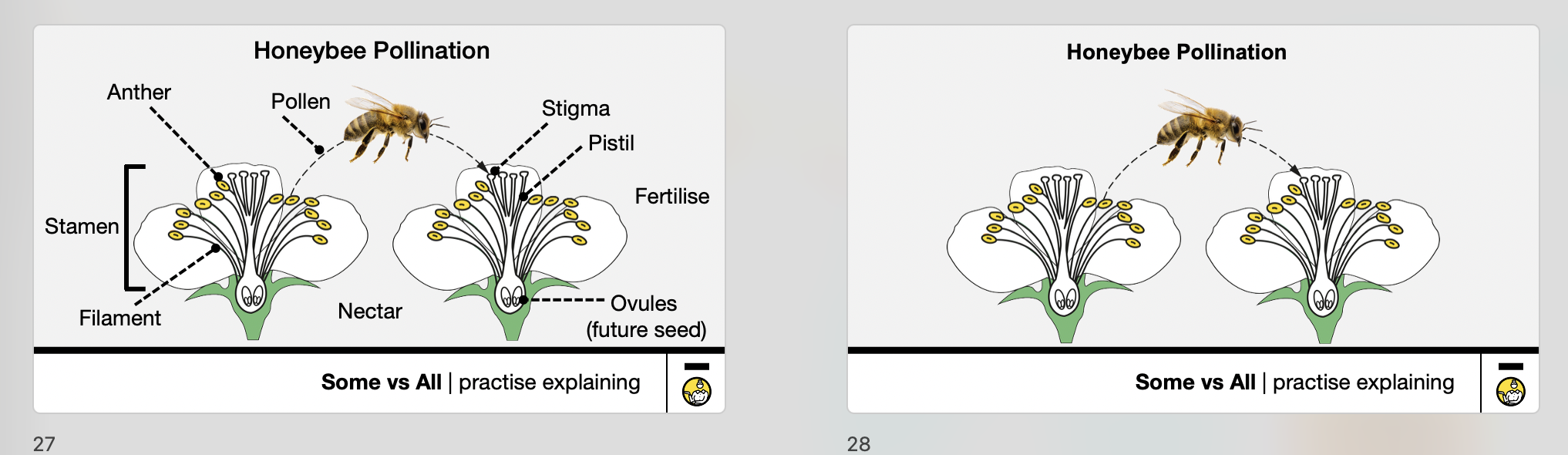
In the absence of a diagram, this is hard to generate from memory if I don’t really remember or understand it. I might say ‘I don’t know’ because I don’t know where to start or which structures to mention. However if I have a labelled diagram I can think about the sequence of events and put them in order, constructing an explanatory narrative using the words presented. Or, to go deeper, I can have an unlabelled diagram, it prompts me to retrieve the relevant terminology to create labels and then I can also construct the explanatory sequence. I have something to think with.
How do I discuss what I do in the holidays in French?
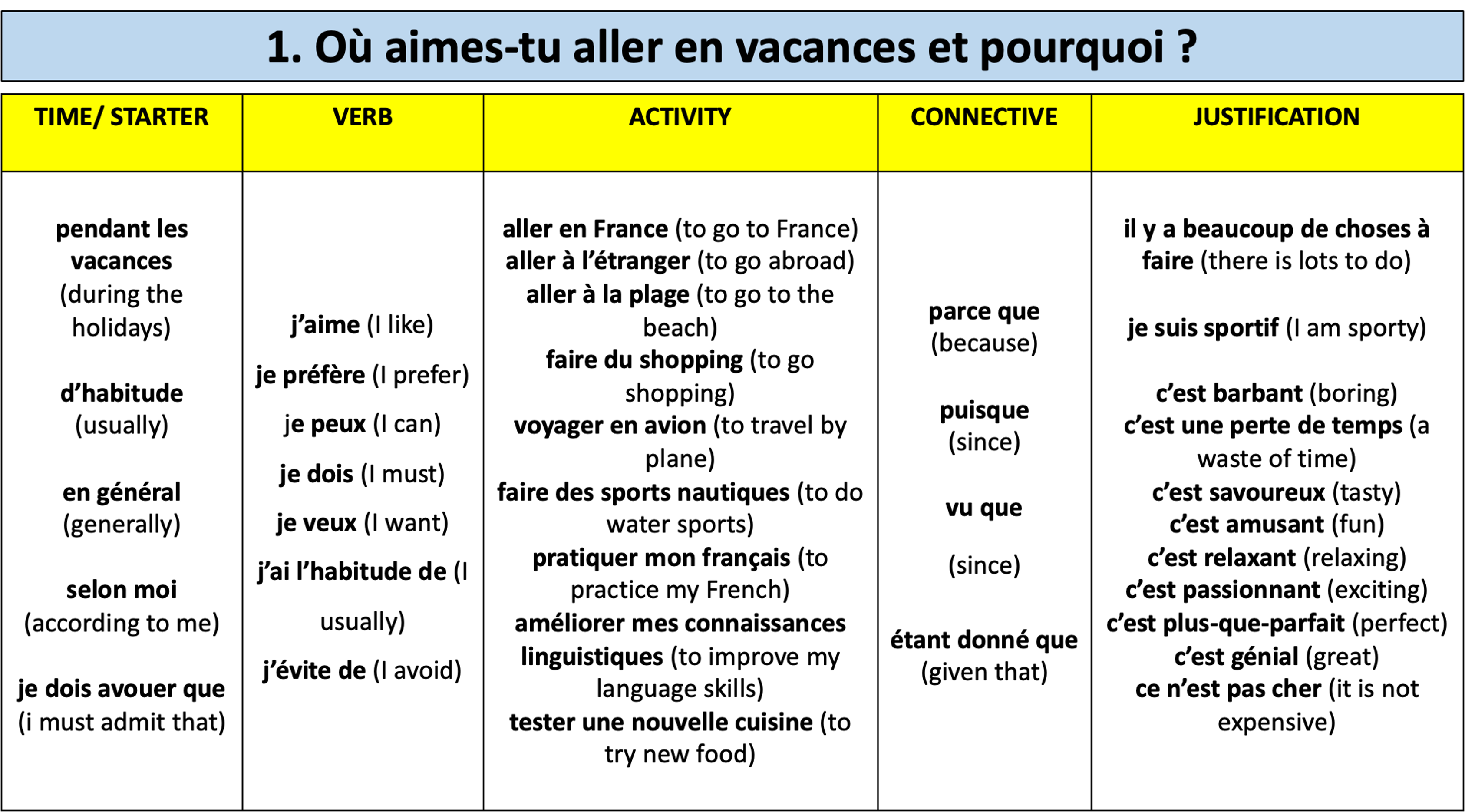
Early on in the learning process I literally can’t answer this question because I have too many ideas to wrestle with each of which is highly tenuous. The teacher asks Où aimes-tu aller en vacances et pourquoi? I might just freeze and offer a shrug because I have nothing concrete to think with – I don’t know where to start, how to link ideas or even all the vocabulary I want to use. A sentence builder gives me something to think with: I have to make multiple choices to create a meaningful sentence. It’s not easy but I can do the thinking. Later I might aim to do this unsupported but right now I’m just learning – I need something to think with.
You get the idea. So – what do your students have to think with when you ask them questions.? How does this manifest itself? Do you provide or create these resources systematically, supporting your least confident students to find success and avoid the trap of self-doubt?
 teacherhead