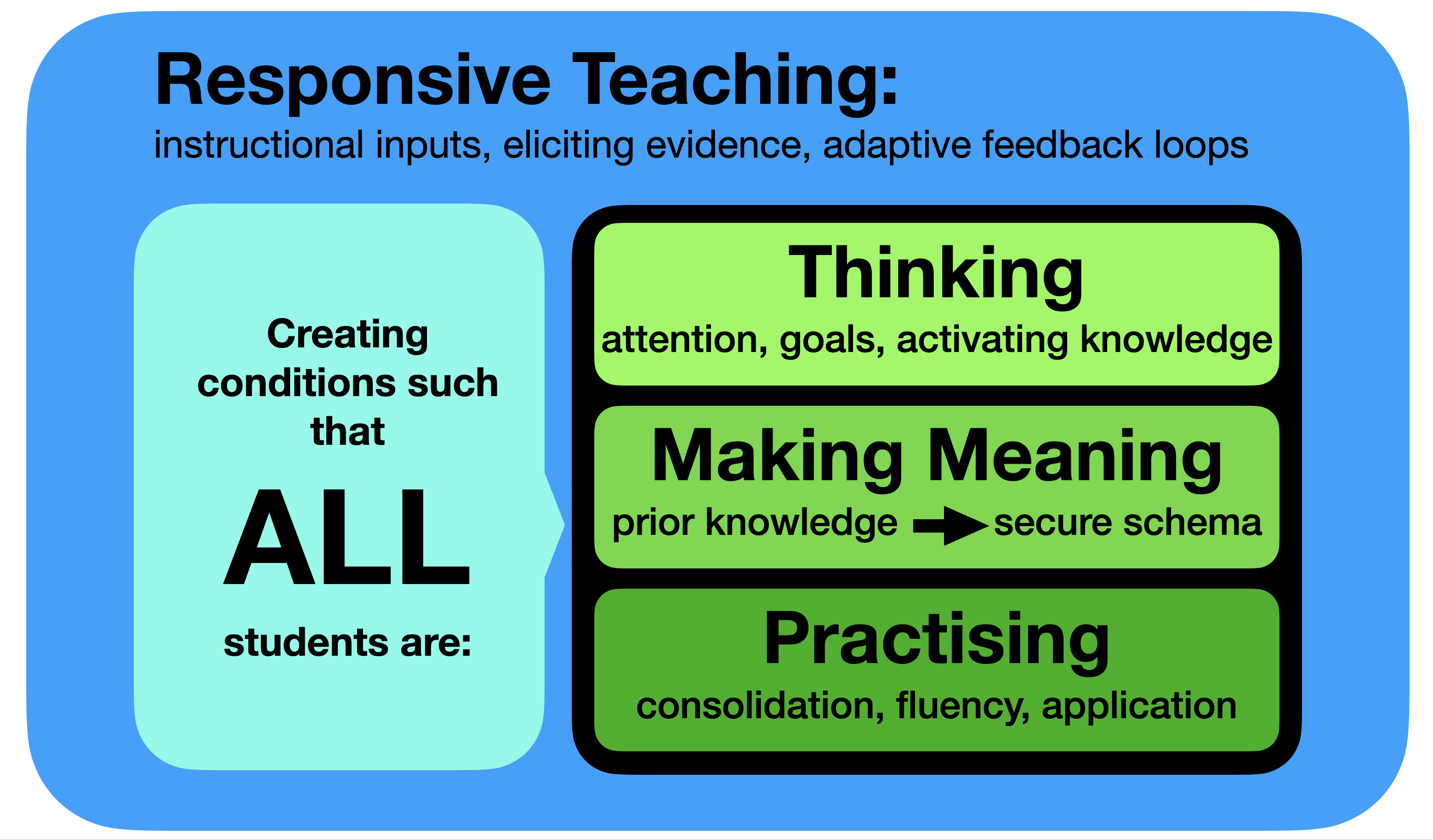
As I explored in a previous blog post, it can be useful to condense the complexity of teaching down to just a few key ideas. Here’s what I came up with:
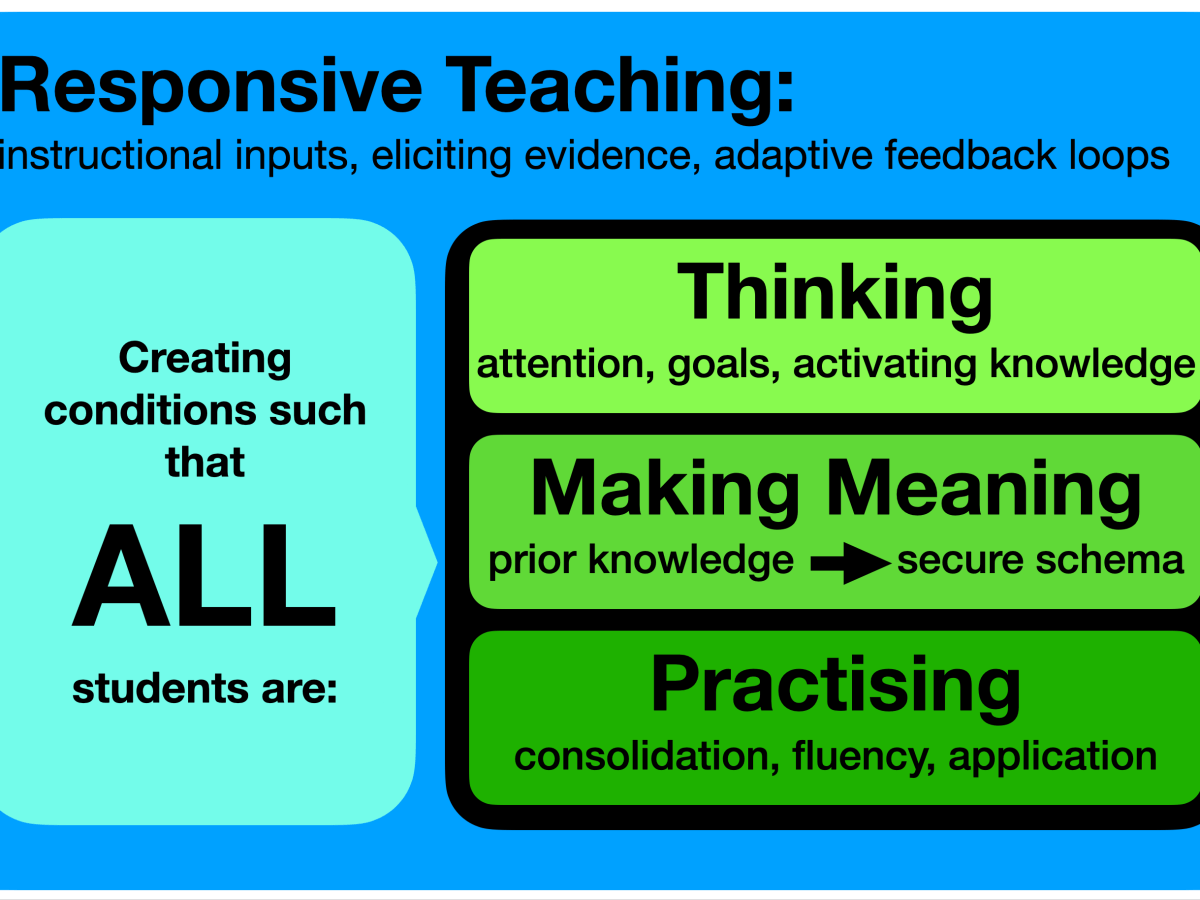
First Principles of Teaching and Learning.
A recurring theme in a lot of my CPD work is to explore what it means to be ‘evidence informed’ in teaching. I’ve reached the conclusion that it’s problematic if too much emphasis is placed on teachers needing…

Obviously there’s a lot to unpack in each area but since I produced this I’ve found it incredibly useful a reference point when I’m observing lessons and talking to teachers:
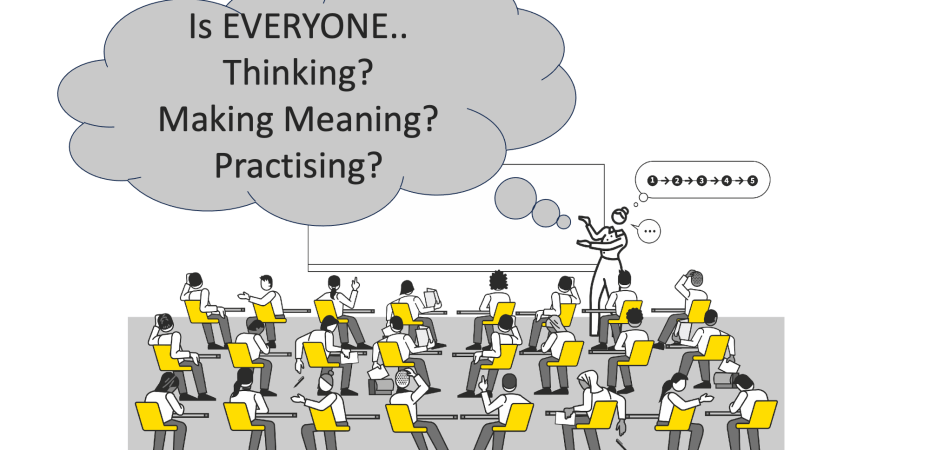
When I go into lessons, and sit at the back, I scan the room and check in with the students around me to experience the lesson from their small corner. I find I’m basically checking whether each of these five elements are present as far as is possible. In discussions with the teacher I’m also exploring how far they are checking themselves:
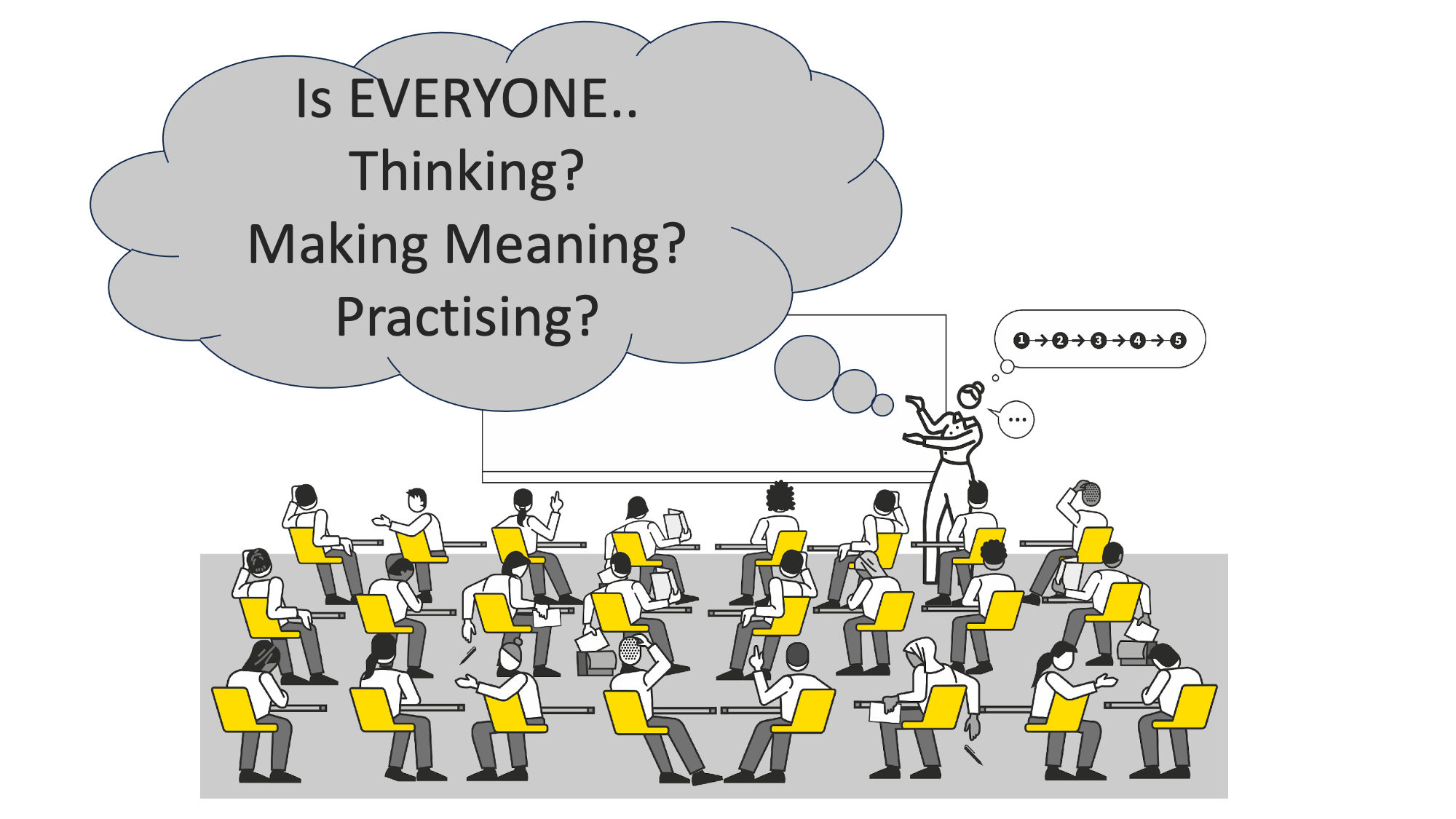
Thinking about theses general principles allows significant variation in the specific form they take so it’s a case of exploring how they manifest themselves in that context:
1.Responsive Teaching ?
In general, is the teaching constructed to allow feedback loops such that the teacher can and does adjust and adapt in response to how well students’ demonstrate their understanding. Are they anticipating the likelihood that some students will find thing harder or might not fully grasp the concepts or master the skills, so they ask questions and set tasks explicitly with a view to find out who might need additional support or instruction.
2. ALL students….?
The ALL is key. Scanning the room, and watching the teacher engage with students, does it seem like every single individual student is being spoken to, involved in questioning, supported to succeed, supervised, checked in on? It’s very very common for this not to be the case because it’s actually just really hard – so I”m not ever looking for perfection. I”m looking for the intention and trying to identify where the gaps are. If the teaching isn’t explicitly geared to involve all students, it probably isn’t going to be.
3. Thinking: ?
Are the tasks and questions set up so that every student has to think or is very likely to be thinking? How could the teacher know? Have they introduced the accountability associated with cold calling, or used whiteboards? Or are they busily circulating to check each individual student is producing the outcomes that demonstrate their thinking? Are they doing a pair-share with a good structured question that requires both students to think? Or is it possible to sit out a patch of lesson while others do most of the thinking?
4. Making Meaning: ?
This is crucial but tricky. Has the lesson allowed all students the opportunity to make explicit connections to their prior knowledge? Have they all made sense of the ideas? How would the teacher know this? There are two elements here:
a) a task or process that gives students a chance to process ideas and generate a response that shows them how well they’ve understood the information. This could be a pair task where students talk through the narrative or story or explanation to see if it makes sense to them as they explain it.
b) a mechanism that allows the teacher to check the ideas that students have formed. This could be a ‘show call’ or whiteboards or pair-share; it could be an appropriate from of retrieval practice. The teacher needs to hear from students what they’ve understood. Multiple responses from a think-pair-share can reveal this as a sample as part of the checking for understanding process, but it’s normally a combination of methods that allow the teacher to get a good read of meaning-making across a class. For sure, unless the teacher is checking, they can’t move the lesson forward responsively.

Rehearsal first; retrieval practice later – an important distinction.
In December, Efrat Furst delivered a superb masterclass as part of our In Action series where she explained the stages of learning using the models used in her brilliant blog posts such…
5. Practising: ?
Finally, I’m checking to see whether, even if students have been involved in all the previous elements, they have a chance to consolidate the learning with some practice. It’s so often a bit of the learning process where corners are cut because of time pressure. Do they all get to use all the new words a few times? Is there any explicit rehearsal and repetition? Do all students get the chance to practise explaining or using the equipment or to re-do their work to respond to feedback?
For me, these lines of enquiry have helped sharpen my focus and my feedback, It covers a lot of bases, keeping all students’ learning in the frame, rather than teacher performance as the main focus. It also allows teachers room to explore multiple alternative ways to achieve the goal in all five areas. Rather than ‘are you always using cold calling’?- the discussion is ‘how are you routinely checking that everyone is thinking?’ Emphasising the general principle over the specific method can help open up the conversation – even if cold calling would be a great solution, it’s not mandatory!
I think this approach might also help to build a teacher’s situation assessment – carrying through asking themselves those five questions in all the many hundreds of lessons they are alone with their class unobserved, thinking for themselves.
 teacherhead
[…] Although I was quite sure than none of this was especially original, since writing it I’ve now discovered that Tom Sherrington had blogged all this shortly before presenting at the conference. You can read his blog here. […]
LikeLiked by 1 person