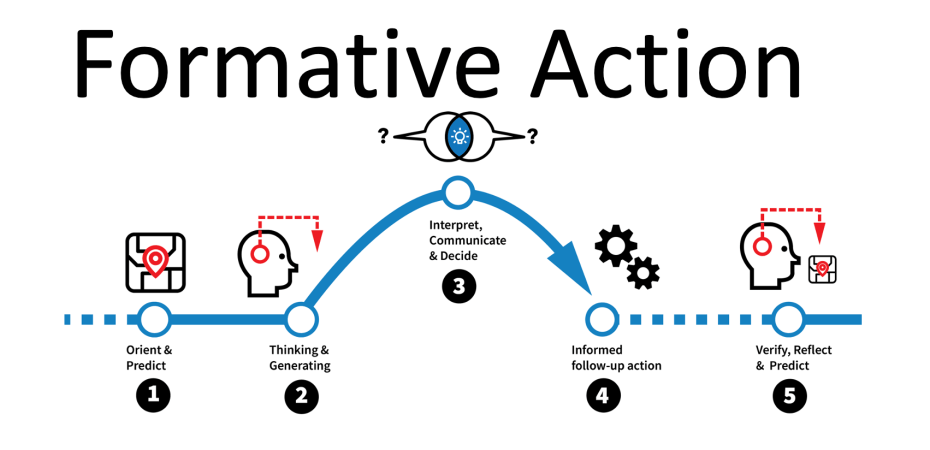
Recently I spent time with the Dutch team led by René Kneyber, Toets Revolutie where they shared their work on their concept formative action and the training programmes they run for schools. I first encountered this at the London ResearchEd in 2022 and it immediately made sense to me. The concept has been described extensively in Dutch and, with help from René, I posted a translation of their own blog so you can read it for yourself here:
Formative Action: a brilliant teaching concept from @toetsrevolutie
In 2022, I had the pleasure of hearing René Kneyber and Valentina Devid from Dutch organisation toetsrevolutie.nl at the London ResearchEd event. They explained how the concept of ‘formative assessment’ or ‘AfL’…

Here I’m going to explore my take on the process. In general terms, it’s a reworking of the idea of formative assessment as described by Dylan Wiliam.:

Revisiting Dylan Wiliam’s Five Brilliant Formative Assessment Strategies.
In many of Dylan Wiliam’s talks and publications he references five ‘key strategies’ that support the implementation of effective formative assessment. The five strategies each get a chapter in his excellent book Embedding Formative Assessment…
In a responsive teaching situation, teachers need to set and clarify learning goals, get students to engage and then elicit evidence of the learning so that teachers can and then adapt their teaching accordingly. The problem René had with this was that in Holland ‘formative assessment’ didn’t translate. They couldn’t get beyond the deeply held idea that Assessment = Testing. It wasn’t compatible with that sense of a process that is truly formative, dynamic, real-time, leading to actions by students to improve their learning. So ‘Formative Action’ is an attempt to reframe it so that these elements are more explicit.
1. Orient and Predict.
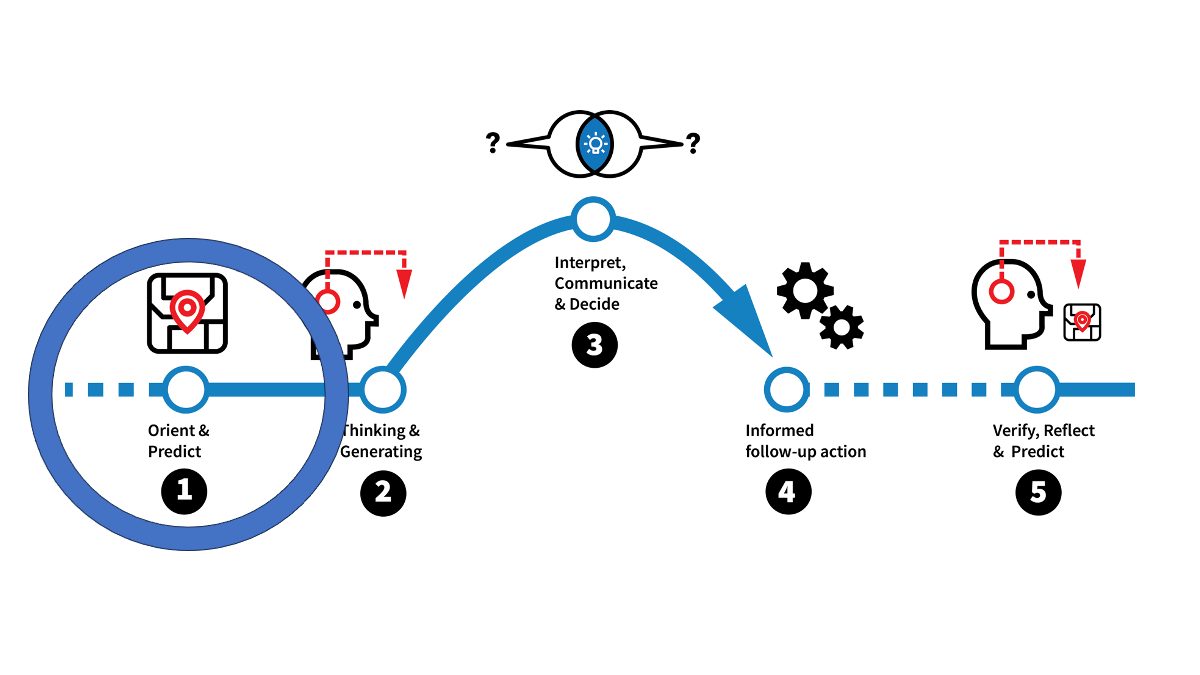
Step 1 aligns with Wiliam’s Clarify Learning Intentions. It’s arguably the most important step because all the others hinge on the clarity with which teachers can establish and express the focus of the learning: what the specific goals are for the lesson, where they sit in the wider map of the learning journey towards the end goals of the curriculum and how this lesson leads to those wide goals. A big part of the work that Toets Revolutie does with schools is essentially curriculum mapping, starting with the end goals and working back to the specific steps that students should take along the way.
Related to this is the idea of ‘sense of quality’ – and for the teachers we spoke to this concept really cut through. Essentially, until you know very clearly what the standards are that you are aiming for in the long term and short term, you don’t have the benchmarks to assess against to then inform the best course of action. The predict element is informed by this road map… you pre-empt areas of struggle or misconceptions in the instructional delivery but also then check to see how students have done in relation to your predictions.
2. Thinking and Generating
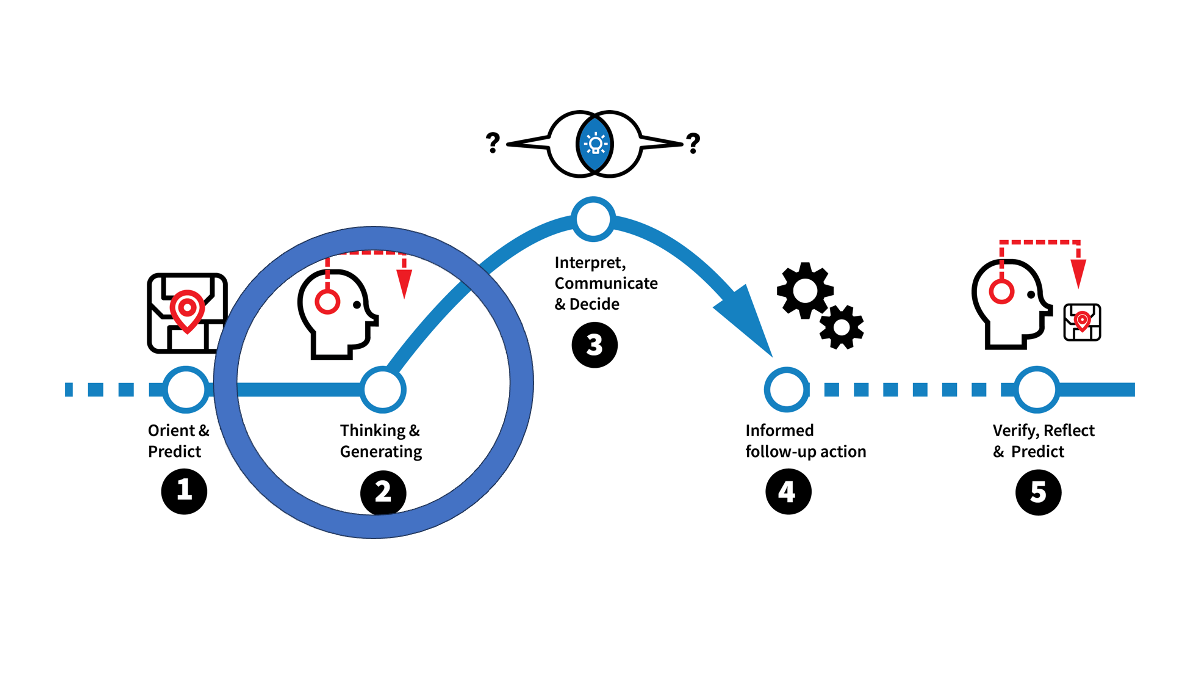
This step aligns with many people’s ideas and observations about the need to involve all student in thinking, revealed through a generative process that yields some kind of product: some evidence of learning. It’s Wiliam’s elicit evidence step. Without those products, you have no source of information to inform your decision-making. Mini-whiteboards, structured pair talk, demonstrating skills in writing or via a physical artefact or performance are needed – and must involve all students. The questios for teachers are then:
- how do I engage all students in thinking and generating a response?
- how will I check and sample those responses?
3. Interpret, Communicate & Decide
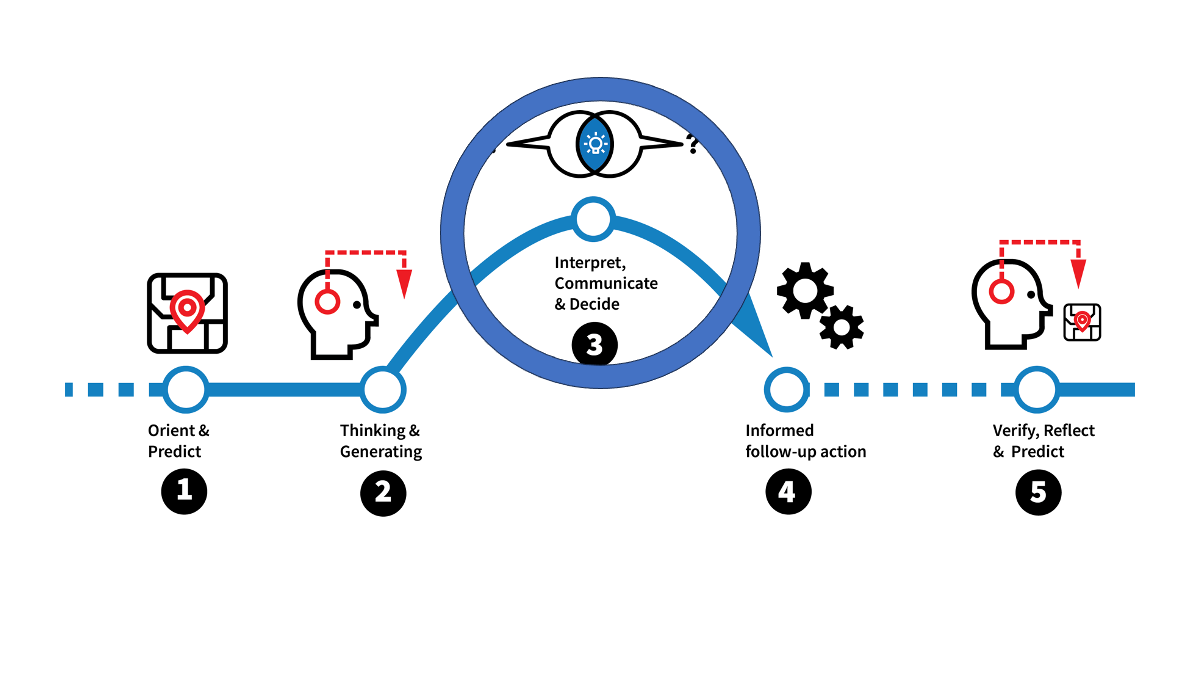
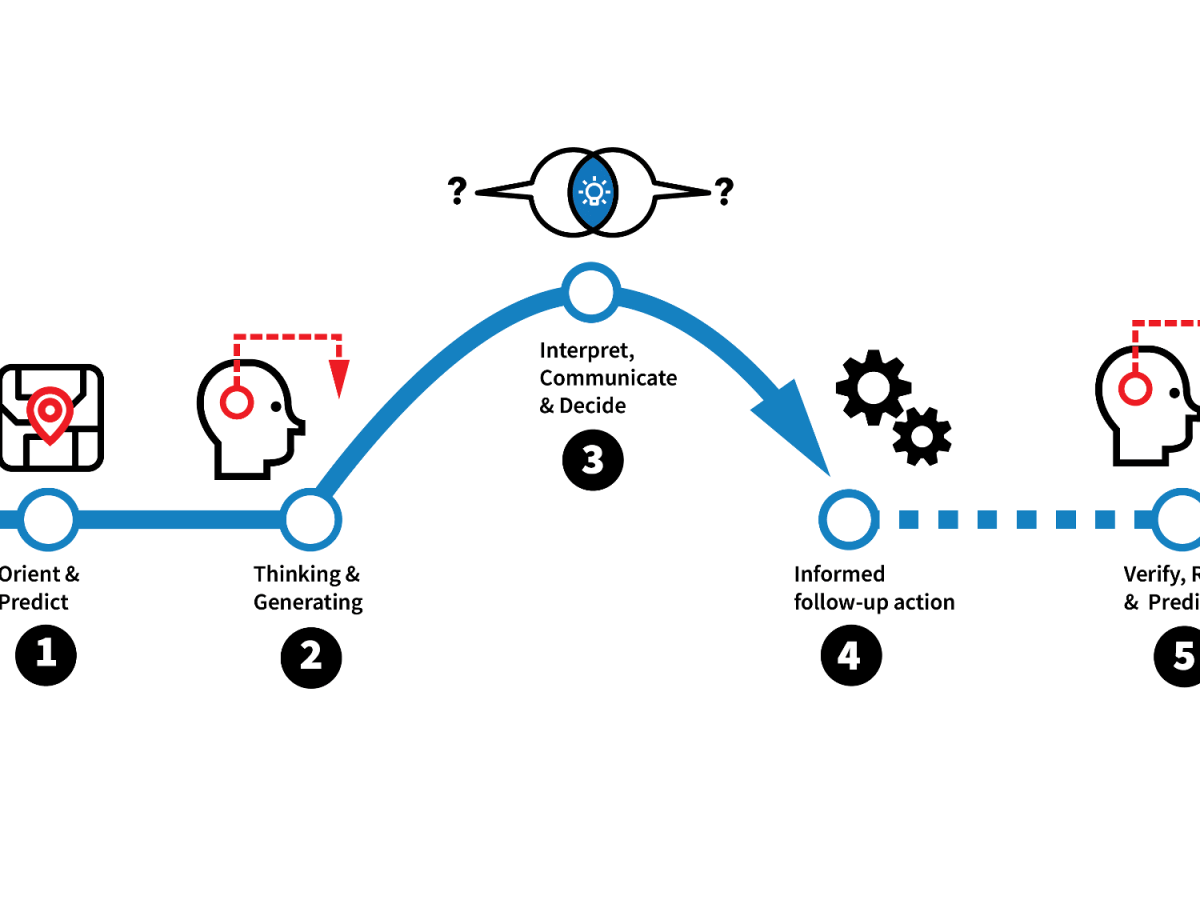
The third step is shown as rising up above the 1-5 pathway. This signifies that process of taking stock.. rising up, hovering above the action to see the lay of the land. This is the assessment moment where students and teachers, evaluate the quality of their answers, their work, their products, their understanding. It’s the artist, standing back from the easel to evaluate their composition. This can weave in Wiliam’s ‘students as resources for each other’ idea – by including peer assessment.
Importantly in this step it’s vital to decide the big ‘so what?’. What happens now? What do the student needs to do in order to move forward.? That has to be the outcome of this step – communicating the next steps to students, or them deciding for themselves. This is Wiliam’s ‘feedback that moves forward’ concept.
4. Informed Follow-Up Action
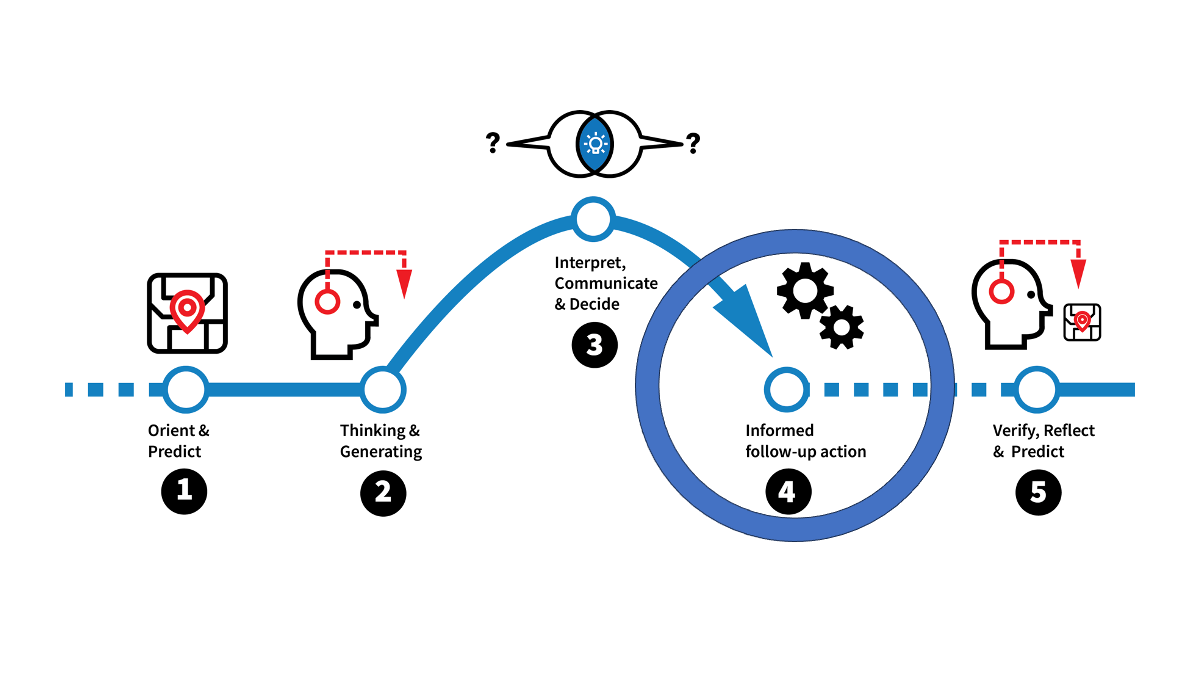
Now we reach the core of things: The Action. Formative assessment only helps if it leads to actions. In Formative Action, this is entirely explicit. The students must now respond to the feedback; they must take the actions identified in the previous step. The feedback has to land back on the ground of students’ tangible activities. Hence the arrow shown aiming towards a landing spot. Teachers spoke of ‘the landing spot’ – meaning the exact actions students must take in light of the review (step 3) of the work done so far (step 2).
Conceptually and practically this is powerful – the feedback must land. There must be action.
5. Verify, Reflect & Predict
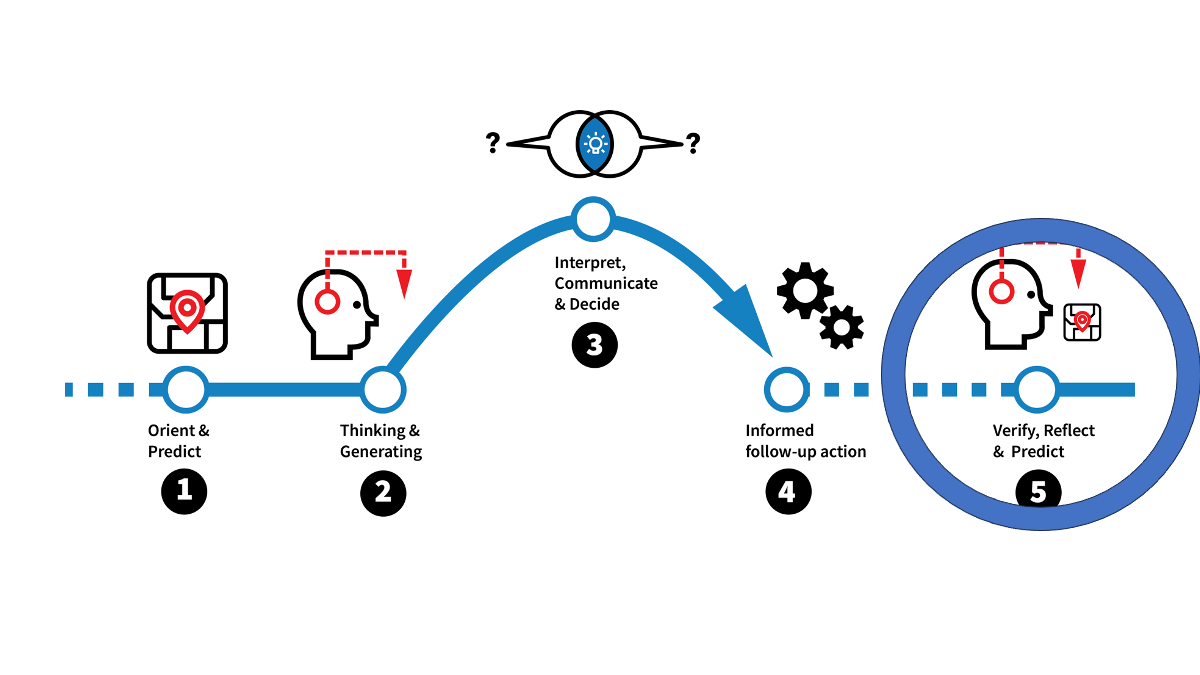
Finally, there is a need to check – to verify – that those actions have been successful. Has the student now understood and produced a correct or more complete answer? Has the knowledge now been secured? Has the quality of work improved?
To complete this step – reflect and predict – teacher and students are encouraged to consider their next steps. Depending on the degree of success so far, the teacher and students can move on to the next part of the learning journey, or embark on more improvement loops. Here, students develop self-regulation and agency -Wiliam’s owners of their own learning .
Conclusion
The teachers we met had found this formulation incredibly powerful. The emphasis on actions and follow up to actions, on feedback loops, on sense of quality – all made a lot of sense . The five steps also provide a superb framework for instructional coaching and professional development. And, of course, it locates assessment firmly in the realm of classroom dynamics, not the examination room.
Toets Revolutie are publishing a detailed book next year – it’s going to be a must-read.
Thanks to all those responsible for this work especially Dominique Sluijsmans, René Kneyber and Valentina Devid.
 teacherhead