Classroom Voices is a series of guest posts providing a platform for teachers to share their ideas. All posts including all images are shared without comment or edits. To contribute, use this link:
Guest Author: Clarise Akwi Mofor
Clarise Mofor is a business and finance teacher at South Bank University Sixth Form, Brixton Hill London. https://www.linkedin.com/in/clarise-mofor-04b05950/
Hello,
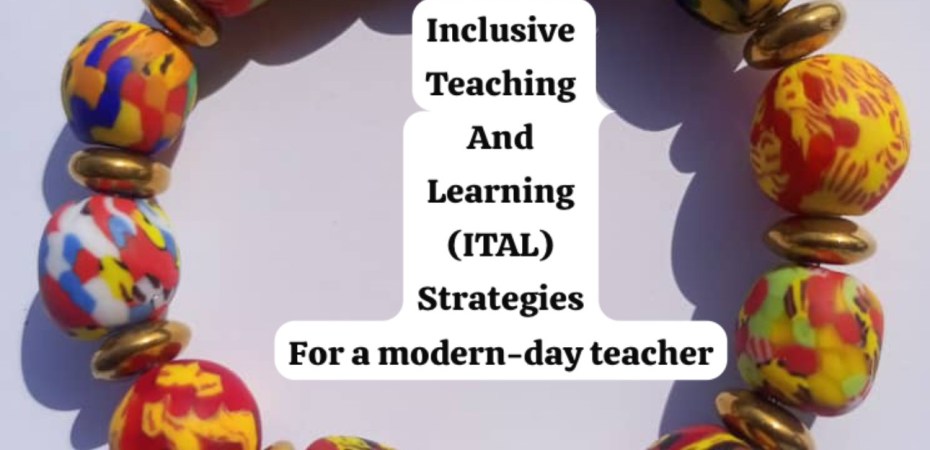
Introducing ITAL Strategies for my 2025/2026 classroom teaching in a technical Sixth Form.
The letters ITAL are synonymous to -ital- the Rastafarian take on eating wholesome, natural, and organic food that improves one’s health. It is with this in mind I decided to create ITAL strategies for a modern-day teacher.
I started thinking about this at the end of the 2020/2021 academic year. COVID-19 had changed how students learn and progress, hence impacting teaching. I had to become innovative to remain in this teaching field. I had to remain innovative but enjoy my job. This is my vocation.
It was clear from post COVID-19 data that literacy, numeracy and metacognition were going to be a concern for teachers. I had to ask myself honest but difficult questions on how I wanted to approach teaching in future. I had to be critical about how much I could influence and change while maintaining a good work life balance. I wanted to be able to address the concerns on mental health from the students I would be teaching in future. Having the time and space to reflect on my pedagogy and how I would want someone to teach my own children post COVID-19, four maintain questions enabled me to develop ITAL strategies:
How do I use prior knowledge of my students to ‘produce’ an added value outcome by the end of the academic year?
How do I create a wholesome, safe, and enjoyable classroom regardless of the students I have in front of me every academic year?
How can I make all my students learn in a ‘wholesome, organic way’ which celebrates their diversity and acknowledges their collective contribution?
What are my signature strategies to enable teachers create an enjoyable classroom whereby teaching and learning is taking place, and the teacher is developing themselves into an expert practitioner?
Inclusive teaching and learning (ITAL) strategies foster engagement, rapport, progress, and desirable outcomes regardless of the background of my students. The importance of ITAL is to acknowledge all levels of students in my class, using their experience as a launch pad on how I teach and why I teach.
ITAL will have be my own researched real-life practices similar to the 36 stratagems of civil interaction, ‘war’ and politics to illustrate strategies which can be used in the classroom irrespective of the context of students, type of teacher or subject.
ITAL encompasses various strategies that celebrate minor classroom wins to creating a classroom culture of teaching, learning and assessment that is designed by expert teachers but is student focused.
Understanding ITAL strategies enables teachers to formulate routines and habits within the classroom in relation to students’ aspirations, curriculum pathway and external changes. ITAL does not see various methods of teaching, learning, and assessing as added tasks, but uses data to drive the methods of teaching effectively and efficiently to promote desired progress and outcomes.
Moving into 2025/2026, I will be focusing on three main classroom strategies (teaching methods) for my ITAL write ups:
- Use of inclusive co-creation learning (combination of modelling and scaffolding) that encourage active participation, ownership, and accountability. All students in class must take part in all activities to enable them create value in their own learning. This will help develop key skills based on resilience and accepting that failure is part of learning.
- Use of assertive and effective questioning as part of the classroom assessment and feedback culture to encourage deep thinkers, who question everything and think outside of the box. This will help to develop critical thinking and problem-solving skills.
- Use of inclusive flip-learning (learning using IT and other tech support) to create a classroom culture of supportive young people who do not see grades as the only metric of brilliance. This strategy also looks at how students use their literacy to adapt their way of thinking and develop empathetic language around their peers. This will help students develop a growth mindset while valuing every contribution from their peers.
I aim to collect data by the end of this year, to show which strategies have been more effective in the 3 cohorts that I teach. These write-ups will be reflective of the technical subjects I teach (BTEC L2, BTEC L3 Business and T Level Finance – Invest banking, asset, and wealth management analyst pathway).
I would love for teachers around the world to read my write-ups.
Clarise Mofor NPQLTD
Curriculum Manager Business & Finance Faculty
Centre Quality Nominee/Lead Internal Verifier Business
 teacherhead