Classroom Voices is a series of guest posts providing a platform for teachers to share their ideas. All posts including all images are shared without comment or edits. To contribute, use this link:
Guest Author: Kyle Meadows
Kyle is Director of Studies and Primary Teacher, Harrow Bangkok. LinkedIn.
I’ve been reflecting on the role of climate change and sustainability in our curriculum. For me, this work goes far beyond encouraging students to reduce, reuse and recycle – though these remain valuable starting points. It’s about helping young people understand the science behind environmental issues, engage with their local and global communities, and take meaningful action to shape a better future.
Climate change is, without doubt, one of the defining issues of our time. Our students will grow up to influence policy, business, science, and society. We owe it to them to build a curriculum that equips them with both the knowledge and the belief that their actions can make a difference. Dolan (2021), who outlines three possible responses to climate change:
- Denial: rejecting the science
- Adaptation: learning to live with the effects
- Mitigation: working to reduce future impact through innovation
I think it is our responsibility as educators to encourage critical thinking and explicitly teach students to think how we can mitigate climate issues.
Why Embed the SDGs?
The United Nations Sustainable Development Goals (SDGs) offer a powerful framework for tackling the world’s biggest challenges. While the UK National Curriculum doesn’t explicitly reference them, we’ve found plenty of opportunities to make meaningful connections – particularly through subjects like science, geography, and design technology.
By embedding the SDGs into our curriculum, we help students connect abstract ideas to real-world issues. Whether they’re exploring marine biodiversity or designing solutions to reduce pollution, they begin to see that learning isn’t just for the classroom – it’s a tool for change.
Turning Learning into Action
At Harrow Bangkok, we have implemented an inquiry-led approach which encourages students to ask big questions and explore them through multiple subjects. Each year group engages with at least one unit rooted in sustainability. These aren’t tokenistic add-ons. They are carefully planned to include deep subject knowledge, creative thinking, and opportunities for real-world impact.
Year 1: How Has Transport Changed Over Time?
This cross-curricular unit looks at the history of transport and its impact on the environment. Students explore the causes and consequences of air pollution. In the past we have worked closely with Clean Air Network Thailand, a Bangkok-based organisation tackling air quality issues. The unit ends with students designing sustainable vehicles for the future.
Year 2: Why Should We Protect Ocean Life?
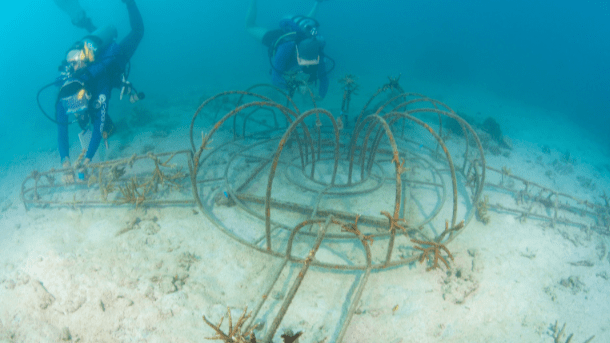
This project brings together science, geography, design and English. Students collaborate with a marine biologist to design artificial coral reefs, which are later deployed in Koh Tao. During the project, they:
- Learn about marine habitats
- Design and justify reef prototypes
- Use augmented reality to visualise coral structures
- Fundraise and present their learning to the wider community
Year 3: Can My Idea Make the World Greener?
After reading Iqbal and His Ingenious Idea, students explore the potential of solar energy. They design, build, and test their own solar ovens – culminating in a hands-on s’mores-making session. It’s a joyful, memorable way to reinforce concepts of sustainability and innovation.
Year 4: How Is Fast Fashion Damaging the World?
Students examine the environmental and ethical impacts of clothing production. They consider ways to make more sustainable choices and take part in school-based initiatives like upcycling and awareness campaigns.
Year 5: Why Has the Climate Crisis Not Yet Been Solved?
This unit challenges students to explore why meaningful climate action is so complex. They examine global inequalities, competing interests, and the tension between short-term needs and long-term solutions. Students reflect on real-world case studies and consider what innovation, collaboration, and leadership might look like in response to the crisis. The unit encourages them not just to learn about the problem, but to think critically about what’s standing in the way of progress and what role they might play in the future.
Real-World Connections Matter
One of the most powerful ways to embed sustainability is through partnerships. Whether it’s marine biologists, clean air advocates, or local organisations, these collaborations make learning tangible and authentic.
When students can see their actions contributing to a real cause—planting trees, fundraising for coral reef restoration, sharing ideas with professionals—they understand that they are not passive learners, but active citizens.
Addressing Climate Anxiety
A growing number of children are experiencing climate-related anxiety. Studies show that environmental issues are among the top concerns for students today, which is why it’s crucial to approach these topics with care. According to a YouGov survey of more than 600 primary-aged children, “nearly four in five children aged under 12 are worried about climate change” (The Independent, 2024). To support their wellbeing, we’ve made a conscious decision to frame sustainability education in a hopeful, solution-oriented way. This includes:
- · Delivering high-quality, age-appropriate content
- · Emphasising shared responsibility rather than individual guilt
- · Creating safe spaces for dialogue and reflection
- · Celebrating action and progress, however small
Key Questions That Drive Our Curriculum Development
As we continue to refine our approach, these guiding questions remain central:
- How do we foster genuine interest in sustainability?
- How can we embed opportunities for mitigation, not just adaptation?
- What’s already happening in our school and local community that we can build on?
- How do we sustain change over time – without burning out staff or burdening students?
- What curriculum structures allow students to imagine new possibilities?
Beyond the Three Rs
Embedding sustainability into the curriculum is not just about bins and posters. It’s about helping students explore complex ideas, engage in critical thinking, and understand their role in shaping the future. That’s why our curriculum goes beyond “reduce, reuse, recycle” – focusing instead on student agency, creative solutions, and interdisciplinary learning.
We’re not perfect. There’s more to do. But I’m proud of the direction we’re heading.
 teacherhead